Back When We Were in ‘Nam (Part 3): The Value of The Whole
Arriving back at the intersection, Jared eased his bike over to the traffic lights where the entire gang had sat only 15 minutes earlier.
Kadunk.
Stalling, he had found, required far less energy than turning the bike off. Especially when one was without friends to shame him for it!
Gazing about at the unfamiliar cityscape, he found that he missed them terribly.
Loneliness was a confusing feeling for someone like Jared, who had always taken great strides to be on his own.
In fact, he had custom-designed his overseas experience that way. Arriving in Bangkok from Auckland, he had immediately caught a train to a buddhist retreat by the burmese border. After partying for a week with the gang, he had escaped once more to do a dive course and again following the Full Moon chosen to spend a month on his own – this time in Malaysian Borneo – exploring titanic caves and diving with turtles. He had done so for two reasons: A) It was the rest his soul and immunity needed from 3 weeks of partying in The Gulf of Thailand but B) it was what he had always fantasized about when he thought of being overseas: Flying solo. Him against the world. Getting to know himself…and the rest of it.
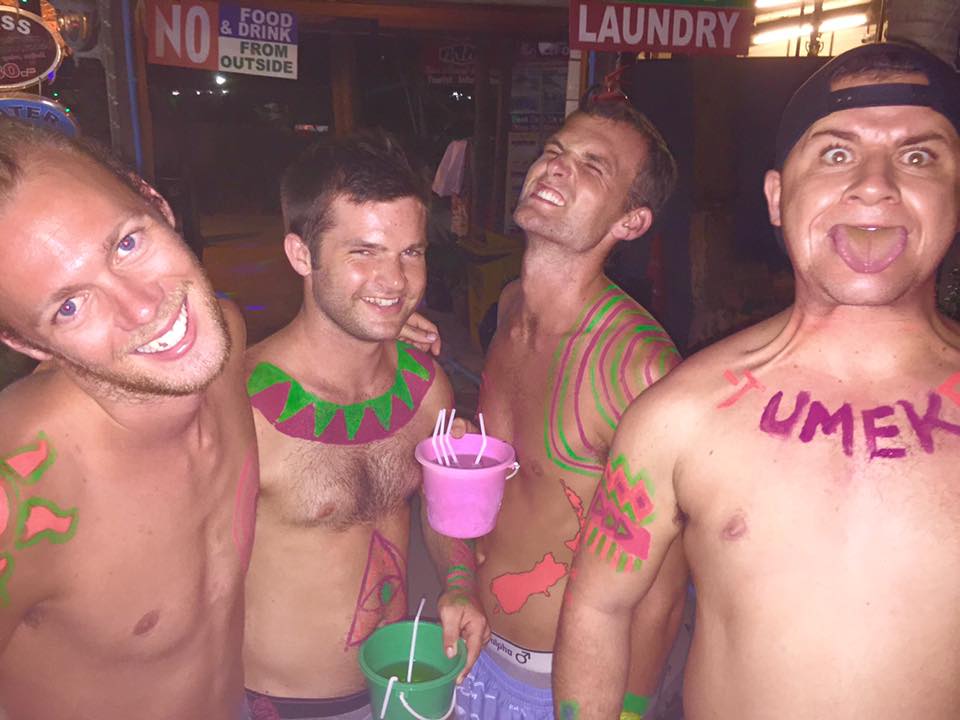
FULL MOON…TU MEKE!
He wondered what this new adventure would be like if he were to do it on his own. A grin attempted to travel from his mouth to his eyes. King of the Road! And with only a gas tank to limit him. Absolute Freedom, in other words. Sure, there would be hazards to navigate…but he would manage.
…Right?
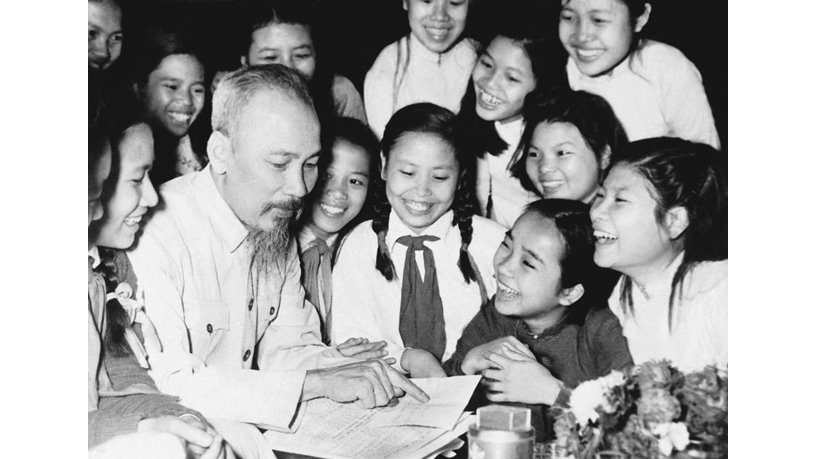
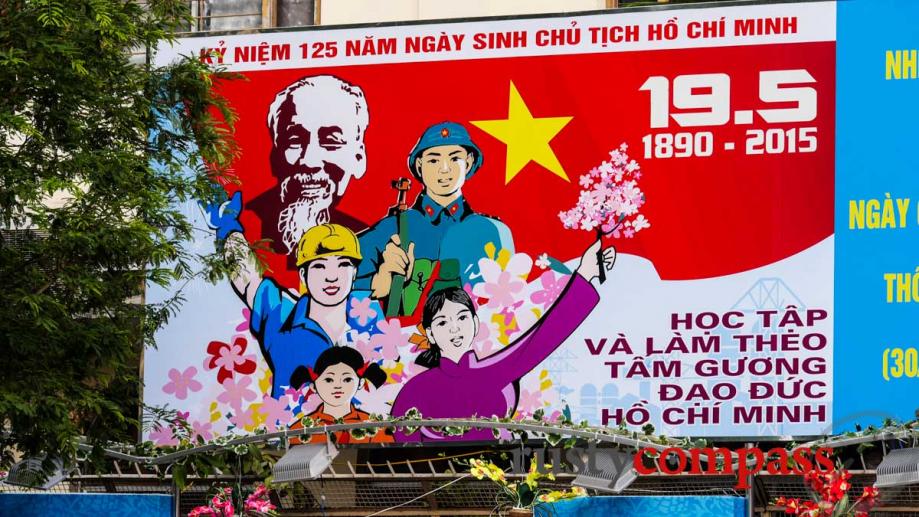
Jared ripped off his helmet and gazed, bleary-eyed, across the busy highway where an old propagandist billboard for communist Vietnam still stood, its blue-hued heroes staring back at him in self-certain purity. A red flag bearing the Vietnamese star flew proudly off to one side, its ripples mesmerizing him. The sounds of the traffic faded out to a dull throb as Jared’s eyes found the smiling ones of Ho Chi Minh, portrayed as he so often is: the laughing, elderly statesman. The beloved figure of so many names:
Ho, the Bringer of Light.
Uncle Ho.
Nguyen the Patriot.
Billbard marking the 40th Anniversary of the end of the Vietnam War
Like Jesus, Joan of Arc, Gandhi, and the Prophet Muhammad before him, many competing accounts of Ho Chi Minh (born Nguyen Sinh Cung)’s upbringing vie for supremacy in the telling of his birth and rise to international stardom (or villainy, depending on who you ask!).
Dropping out of his studies halfway through, he travelled through North America and Europe, before coming to France to settle in The City of Lights. As the delegate for Indochina, Ho Chi Minh failed to achieve independence for his country at The Versailles Peace Conference in 1919 and later accepted an invite to join a Communist Organization in the USSR dedicated to training revolutionaries to overthrow capitalist regimes. Thanks to Lenin and the Bolshevik uprising in Russia, revolutions were very much hot at the time!
Ho Chi Minh performed well under his soviet tutelage but his commitment to the cause was regarded with suspicion by his superiors. This was because he saw communism only as a means to the end of Vietnamese Independence, a distinction between him and other revolutionaries that has allowed his mana to stand the test of time.
And don’t get me wrong. There were plenty of opportunities for him to fall short on public opinion.
Ho Chi Minh served as president for the nearly 25 years from 1945-69. The conflicts he saw the country through in that time changed Vietnam and the wider area forever. Millions of Vietnamese and tens of thousands of American soldiers (who had never before seen the country they were being sent to control) died in the style of guerrilla warfare the Viet Kong pioneered in the north while defending their jungles and people. The years following the war (and still now) earmark a communist era that people feel conflicted about, it must be said – not least of which because of the lives that it cost to establish. The competition in a post war, developing nation between ‘ma and pa’ family shops and businesses (especially those in the South), can also be intense, and with the exception of religious holidays where there is “giving back”, Vietnamese families mostly look out for their own.
The lingering animosity between North and South has been described to me as something like the rivalry Australia and New Zealand enjoy – so, not exactly North and South Korea! – but the difference in pace and tone between those living in intense Ho Chi Minh in the (capitalist) South and the relatively laid-back Hanoi in the (Communist) North is worth noting.
Whether modern Vietnam embodies the benefits of communism Ho Chi Minh tried to bring about is not for me to say. Family remains central, for one thing – more than what the West can say. But the modern forces of individualism, privation and competition have largely done to communism what they have done to capitalism elsewhere: Creating large populaces ambivalent at best about the plight of others in the community, such is the innate drive to stay one step ahead and feed their own, especially when so much was taken from families during the war.
The royal impressions of Uncle Ho adorning cultural sites everywhere they looked told Jared and the others that whatever else might have happened, the man and what he stood for were seen as more than heroic. And Vietnamese from north to south seemed to be unified on this at least: their love of a man who envisioned a united Vietnam free of oppressors, be they French, American, Soviet or Chinese.
“I follow only one party: the Vietnamese party” Ho Chi Minh (1921)
There was a point – Jared knew – buried in what communism attempted to be. Beneath its seeming inability to sustain populations above the 200-odd people that we evolved to live with, there was a transcendent truth which evaded both the uncritical praise of his Arts Lecturers and the dignified sneer of his Catholic upbringing. There was a truth in it, in fact, which appealed to the heart of religious and political systems everywhere and it is this: In the core of our being, we know we are one. From the infinite systems of microbes that throw into question our notions of individuality by making up our bodies and those of all living things, to the patriotism of modern tribes and nation states which – even if only invoked in the ecstasy of the All Blacks scoring – everyone…everyone knows what it means to say: We are One.
Despite years of celebrating his rugged individuality, Jared found his newfound isolation on the road not just stressful but suffocating. Particularly when he found himself in a country so predicated – at least in theory! – on the value of the whole.
Flying solo? He wasn’t sure he wanted that at all…
In the space of just a few deep breaths, he had been transported swiftly out of his panicked, first-world motorcycle debacle and into the realm of heroic myth and symbolism portrayed in the figures in front of him. His body was exhausted from hours in the saddle; his energy spent. As he continued to gaze at the proud faces on the poster, he felt the focus of his vision soften and give way. In some dimly lit recess of his mind, he recognized that he was seeing on the old billboard not the controversial political figure, but the transcendent ideal Ho Chi Minh is most often remembered for: self-determination for a united people connected to the land. A timeless ideal, but one which history – when told right – tends to look favourably upon.
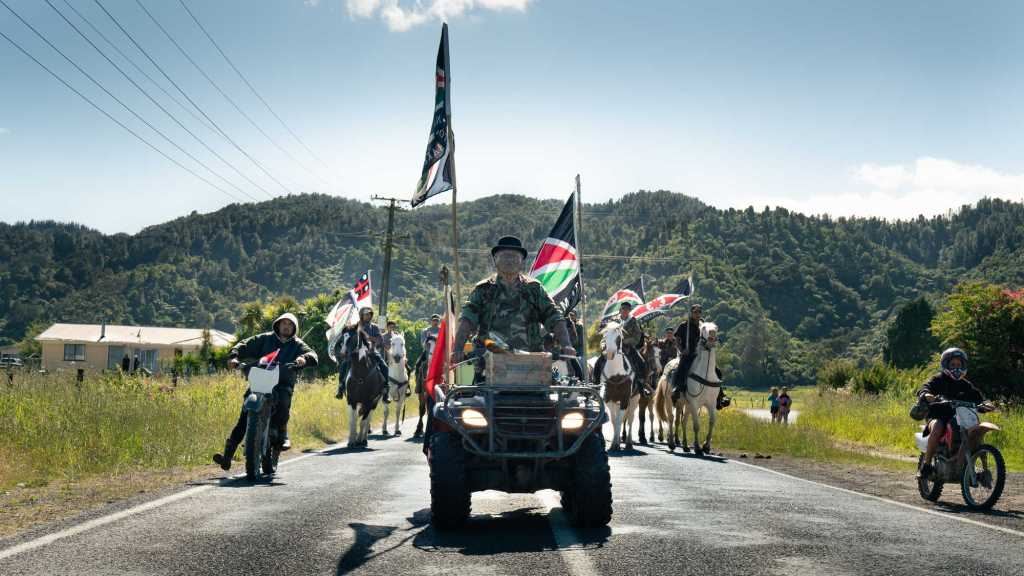
‘Muru’ (2022) tells the story of the Tūhoe Raids, from the perspective of the people who lived through them
Any comparison with Stalin, Pol Pot, or even Che Guevara fall remarkably short with Ho Chi Minh and the enduring popularity he enjoys, compared with the other Communist Leaders whom history has largely condemned. His vision – at its heart – was not communist, but deeply Vietnamese. He was dogged and determined and saw in the throes of the storm he led his country into, an opportunity to prove their worth and be reborn as one people:
“After the rain, good weather. In the wink of an eye, the universe throws off its muddy clothes.”
Ho Chi Minh
His first-world problems shoved firmly into perspective against the backdrop of Agent Orange Trauma and desperate campaigns for nationhood, Jared came back to reality with a start as a truck flew by on the highway in front, skimming his nose. He staggered backwards, heart racing once more. Could he do this trip on his own? Could he do anything worthwhile that way? Without his tribe to share in the highs and lows, the thrills and spills…As his pride wrestled with his heart, he had to admit it was unthinkable. Without Jamie to guide him…(could he?) or Matt to make him laugh (would he?) and the leadership Ant fell so naturally into (He couldn’t)…Cordelle’s raw vitality and Jonelle’s free spirit…(He wouldn’t).
Jared’s eyes scanned the endless throng of traffic for a sign of his friends, hope failing in his heart.
“Don’t worry…abooout a thing…”
He smiled, imagining he could still hear Anthony’s UE Boom blasting from atop their backpacks. He swayed where he stood, bike in hands.
“Cos’ every little thing…is gonna be alright!”
Jared’s smile cracked wide open.
A chorus of frenzied beeping and cheering was speeding toward him accompanied by a broadcasted voice he was beginning to believe he’d never hear sing again…
He knew this trip would be nothing on his own. Without his tribe. His people. As the smiling, shaking heads of his friends came into view, Jared thought of Chris McCandless (that hero of solo travellers everywhere!) and what he had written in his journal before the end: “happiness is only real when shared”.

 jared lanigan