The pros and cons of The Old School
“It is easier to build strong children than to repair broken adults.”
F. Douglas
There are no words to describe the experience of listening to a parent asking me what to do about their primary-aged child who is talking about ending their life. The rates of self harm and suicidal ideation among our young tamariki (to say nothing of our teens) is a darker aspect of the mental health crisis that I believe a lot of people just don’t want to touch, and who can blame them? The very generation upon whose shoulders we are placing the weight of the future of the planet and civilization are increasingly unable to hold even the weight of their own emotions. In my opinion, convenient theories about neurodiversity do not hold the full weight of water our kids are struggling to stay afloat in. The rates of learning difficulties, antisocial behaviours, spectrum and mental health disorders demand careful attention to what is happening. Are we just more aware of our kids’ difficulties, or are we actively contributing to them?
There is emerging research that if we don’t allow our tamariki to learn how to regulate their emotions in their first years of life, their ability to think, focus and function in school and life can be severely impaired. Although I have experience teaching Primary School Kids ESOL, it’s worth saying I am not an education expert. I have spoken to quite a few primary aged kids as a counsellor for both Lifeline and Kidsline however and the sensation of buckling under academic expectations and big emotions they don’t know what to do with are common. Are we insisting our kids learn cognitive skills (i.e. literacy and numeracy) at a time when we should be prioritizing emotional regulation too? After all, the areas of the brain required for one are intimately linked to those of the other.

With a sensation akin to diving into icy water, I have been contemplating how we just take for granted the way modern schools routinely separate kids from their parents and kin groups, micromanage their behaviour in bizarrely specific ways, (‘Uhhh, tuck your uniform in or we are going NOWHERE young man”) and bombard them with abstract information for hours at a time that only vaguely applies to their instinctive ways of being in the world (in nature, in play and in connection with/service to the community) that we as adults forget or have been conditioned into forgetting.
Tyson Yunkaporta is an Aboriginal Thinker who suggests that the modern schooling environment is a form of domestication (not unlike the way we tame farm animals) we inherited from an 18th century Prussian military state (adopted by the rest of Europe and America) which depended on extreme levels of citizen submission and subscription in the army to remain near 100% in order to maintain a tight grip on their empire.
Is the ‘military’ we are conditioning kids into submitting to these days an economy based not on our needs but on our wants? Our desire to see them excel in a lifestyle that requires militant tunnel vision and working weeks, an astronomical mortgage and levels of family stress unknown throughout human history?
It’s worth asking the question because the fruits of this heavily-enforced cognitive curriculum in 2022 are a highly efficient, highly knowledgeable generation who are psychologically crippled by a romantic rejection or the first sign of stress when the study schedule that matters begins a few years later.

This is to say nothing of the skyrocketing levels of attention deficit disorder, antisocial behaviour and learning disabilities our tamariki are manifesting. Did we really just miss these things in the past? Or are our kids minds the canary in the coalmine for an ‘education’ system and upbringing so far out of alignment with nature, we are forced to medicate their brains into rolling with it?
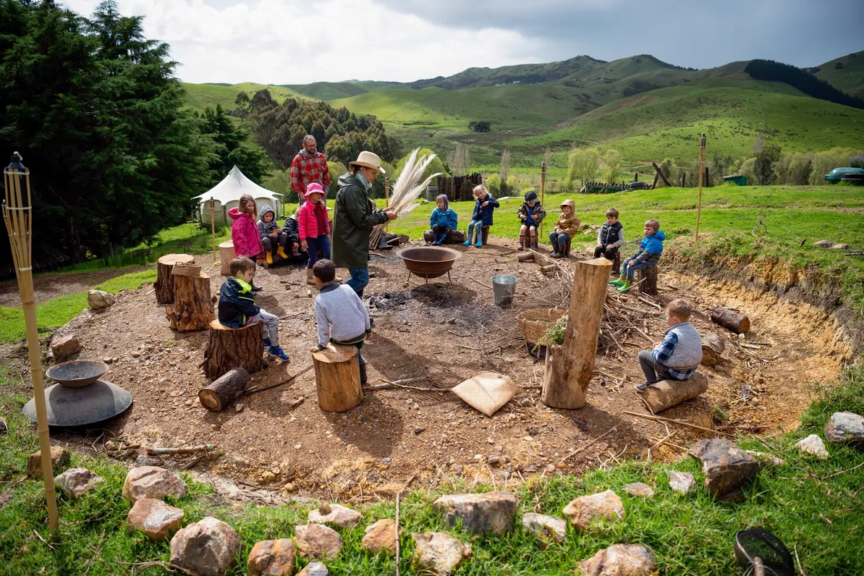
Here’s a suggestion: Let kids be kids and damn both the early insistence on literacy/numeracy and the petty microconditioning of behaviour required to hammer it home. School going online during COVID lockdowns was a simulation of this and yet we still hear the fervent calls of parents and teachers to ‘bring their kids up to scratch’ after the last couple of years of disruptions. Are we so terrified of our kids being left behind in the endless race toward growth? Discipline and cognitive skills are one thing. We all need them, particularly these sapling minds in order to contribute in the jobs they desire. But while we’re at it, teach them also to be in nature, (not just to use but to revere it), to learn to sit with the raw state of their bodies and minds through meditation, to connect with and learn from their elders, to become bored and stimulate their imagination, playing as all young mammals do to learn boundaries and spontaneity, to serve the community/local ecology in small ways and while they’re out cleaning that stream: to throw mud at each other when someone least expects it, and have them return fire…
Basically the kind of experiences impossible to teach on an intellectual level that allow them to sit comfortably in their own skins, know their boundaries and emotional landscapes and how to treat other living things from that position of mindfulness and empathy.
Even once kids graduate from primary school, technical skills in the NZ curriculum are being heavily emphasized at the expense of the arts. Should that matter? I mean, do our kids really need to be composing music, painting canvases or writing novels? It might not help them with their grocery bill but it may be useful as a channel for them to express emotion through, inspire others to awareness and social action, or as a powerful coping alternative to substances and self-harm.
God knows an excellence mark in Calculus will only get your teenager so far when the chips are down, and they are struggling for relief.
Also, when was the last time you saw a young person climb a tree?…
Does preventing all harm from coming to our kids protect them in the long run?
From time to time in the years to come, I hope you will be treated unfairly, so that you will come to know the value of justice. I hope that you will suffer betrayal because that will teach you the importance of loyalty. Sorry to say, but I hope you will be lonely from time to time so that you don’t take friends for granted
Jonathan Haidt (The Coddling of The American Mind)
“Helicopter parenting” is a good buzzword but is it really as major as we like to make it out?
I am lucky enough to remember a time without internet when I was growing up. The understanding was that if you weren’t at school, you would go outside and entertain yourself (“And don’t come back before dark!”). With my mates, we would build treehouses, play rugby and throw bark at girls we liked. Toxic masculinity in its purest form!
But we risked things.

At age 7 I rode into a brick wall at 50km an hour and my helmet slipped up, resulting in a tennis-ball sized lump. I impaled myself on a bamboo stick sliding it into a crack while rollerblading, the other end bruising my guts. I fully cased mountain bike jumps and reversing cars and broke my tibia coming down a fireman’s pole at age 5 on a playground that didn’t mock me in it’s bubble-wrapped level of safety.
And I’m still somewhat anxious!
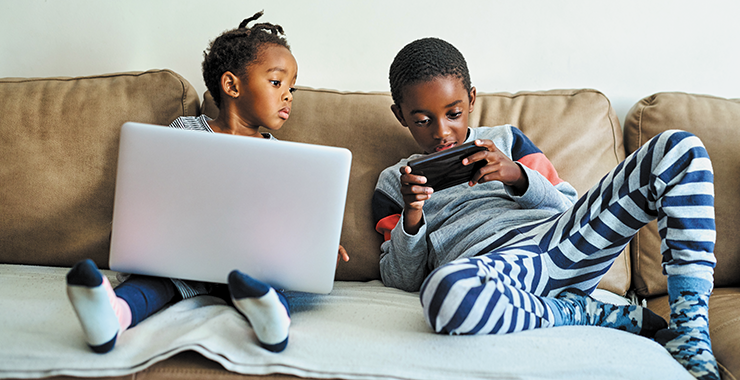
Can we now begin to imagine how this anxiety manifests for our ipad-raised kids and how unfamiliar they are with their limits?
What Jonathan Haidt and others are getting at here is that in an attempt to protect our kids from physical and emotional harm early on, modern parents are denying them the tools to grow and thrive through the inevitable suffering of life.
A missed chance to fall from a tree results in an adult seeing potential falls everywhere he goes.
A mother placating her screaming son with ice cream spawns a university student who breaks at the first moment they require discipline.
I’ve become curious about whether this principle of risk reduction at all costs is also playing out at the social level. For instance, are we teaching a generation of kids that their feelings are always legitimate cause for action, that they trump other people’s rights to express conflicting opinions, or that priveleged groups are largely in control of their life outcomes? The potential result if so is an inspiringly tolerant and socially conscious wave of humans but ones who learn through sheer force of habit to track the ways they are victims of a powerful, hegemonic society that must be raized to the ground rather than consciously improved.
How does the solo and two-parent model compare with “The Village”?
“Every day, in a hundred small ways, our children ask, ‘Do you hear me? Do you see me? Do I matter?’ Their behavior often reflects our response.”
L.R. Knost
Divorce rates skyrocketed from the 1970s onward and Conservative America lost it’s mind. Beyond all the religious condemnation and talk of the failing moral compass of the west, are there any real life consequences?
In our clamouring to understand why so many of our young people aren’t at peace in their bodies and minds, who seem to have endlessly unreachable expectations for themselves and who so readily drag each others hearts over coals while dating, we might forget the fact that by distancing one parent or another from the children they had brought into the world, our society was carrying out an unprecedented social experiment that we are just beginning to see the results of.

Of course we need to acknowledge the liberation people have achieved from abusive marriages and success of so many solo parents and co-parenting couples beating the odds. The kids of these arrangements are undoubtedly served. The question I am more interested in is how has the wholesale rise of divorce rates impacted where it most counts: producing emotionally healthy adults who love themselves enough to love and trust others?
And that by no means is intended to lay our questions down at the feet of the divorced. The 2-parent model as it exists today is just as much of an experiment. Women joining the workforce was long overdue in the West but the sleight of hand was the owners of wealth and industry simply compensating by reducing the amount the sole-earning men were getting and…hey presto! You’ve got double the workforce for the same price tag and no one is winning, not least of all our kids stuck in daycare (probably a risky idea for under threes), brought up by devices and caressed to sleep with social media.
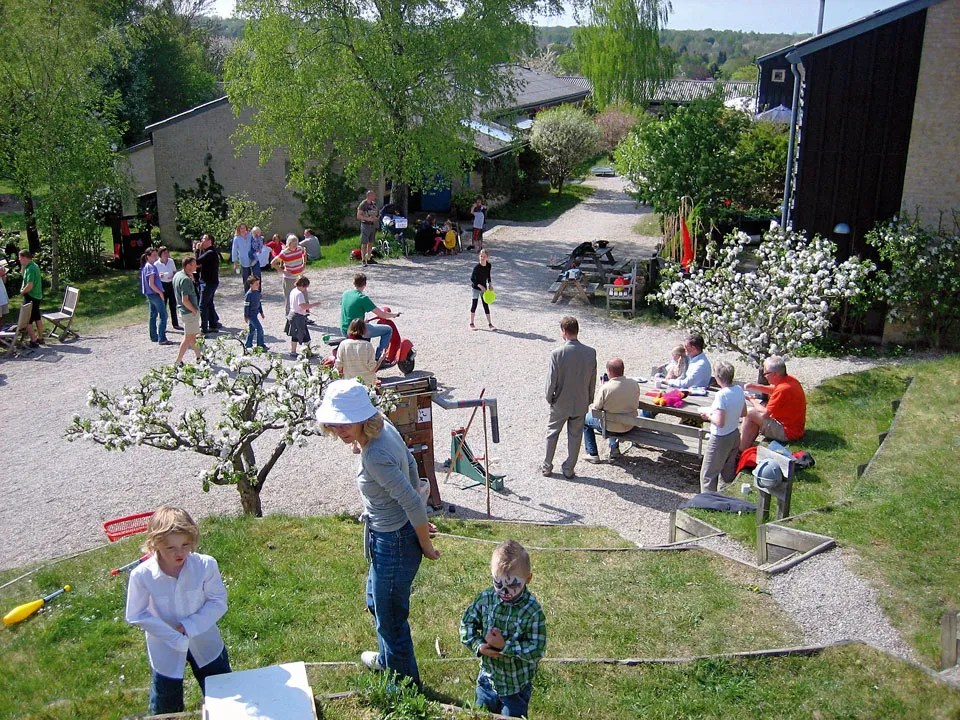
“It takes a village” or so they say, and the commitment of millennials to co-living communities and alternative, scaled down ways of living as well as their lower divorce rate (somewhat counter intuitively) reveals them as the generation who might turn the tide for our kids’ wellbeing. To my mind, the more loving adults and playmates in a child’s immediate space and life earlier on, the more diverse the opportunities for them and the more desperately deserved breaks mums and dads are going to get from their kids. Indigenous cultures know this intimately. The West is doing its best to remember.
So, who’s your tribe?
 jared lanigan