
From the time I first heard lead singer of Tool Maynard James Keenan talk about Kundalini Yoga, I was hooked. On a podcast, he explained to host Joe Rogan that some of his friends who practiced Kundalini Yoga could – armed only with the breath and meditation – communicate with “entities”. And that the message coming through from the other side was that we are in for a tumultuous era of humanity, but that we needed to trust that everything would be alright. At face value at least, the entities he described bore some similarity to the variously described “machine elves” or “balls of light” encountered in DMT/magic mushroom trips I’d heard so much about from Terence McKenna recordings and I wanted in.
Kundalini is thought of as the divine energy of the Goddess or life energy coiled at the bottom of the spine. The first records of its techniques were made in the Upanishads (Hindu Scriptures) around 800 AD but for most of its thousands of years of existence, it was practiced in private. Teachers would pass the techniques on to students who had been through a purification process and strengthening of their nervous system (including yoga positions) in order to manage the experience. In the late 60’s, Yogi Bhajan ended the secrecy of Kundalini practice by introducing it to the American Public over a 30 year period. Despite multiple allegations of physical, sexual and emotional abuse made against Bhajan in 2020, many of his followers choose to continue to believe in Kundalini Yoga as a healing force for good. Today, around 50 countries list trained teachers of the technique and 300 million people worldwide practice yoga more broadly. Healthline reports the benefits of Kundalini as including reducing stress, anxiety and improving cognitive functioning with “no evidence for the long term negative effects claimed by some”.

Thus, at a New Year’s festival last year, I jumped at the chance to sign up for a Kundalini workshop and sat captivated, as the gorgeous, white-turbaned instructor began by talking us through the basics. She was uber calm, a portrait of sensual Brazilian energy and esoteric wisdom. Presently, she took us through some ‘fire breath’ exercises (intentional use of hyperventilation) before sending us off on our first steps to Kundalini awakening.
I had to wonder…what is this ‘awakening’ that everyone goes on about? There is much that is discussed in terms of the ‘serpent’ of energy that one can experience writhing up from the base of your spine to your third eye (or crown chakra) or the peace and egolessness that results, but I failed to see how this would result in inter-dimensional communications with the beings who knew my hopes and fears; the Ascended Masters as I knew them.
And oh, how I longed to know them!

It wasn’t much longer after – against my loftier religious sensibilities – I made a quick google search for what the experience actually felt like for people.
The potential symptoms, instead of spurring me on, actually ended up chilling me to my core.
In one instance, an online blogger known as El Collie had what she described as an involuntary kundalini awakening where for years she would – against her will – experience automatic body movements (including forming yoga positions and mudras with her hands), crippling pain and an absolute cacophony of psychological and physical ailments including her skin crawling ‘as if with termites beneath the surface’. After a time, she became depressed and frightened, especially when baffled medical practitioners sent her in circles looking for a cure:
“Brain tumor, Lyme disease, ALS, myasthenia gravis and lupus (or perhaps another, more rare autoimmune disease) were suspected. I was repeatedly told that I was “an interesting case” — from the mouths of physicians, an ominous euphemism meaning, “We’ve never seen a disease quite like this.”
From El Collie’s Blog
A friend then explained that instead of constantly reacting to it, it might be better for her to ride it out, which she took some comfort from. Throughout her experience, Collie maintained the belief that the reason she wasn’t having the same enlightenment experience as others was that there was a purification she needed to work through before she could experience the bliss that awaited.
Collie allegedly ended her life in 2002. Whether or not her symptoms contributed to her death is a hard question to answer but it’s certainly occurred to some.
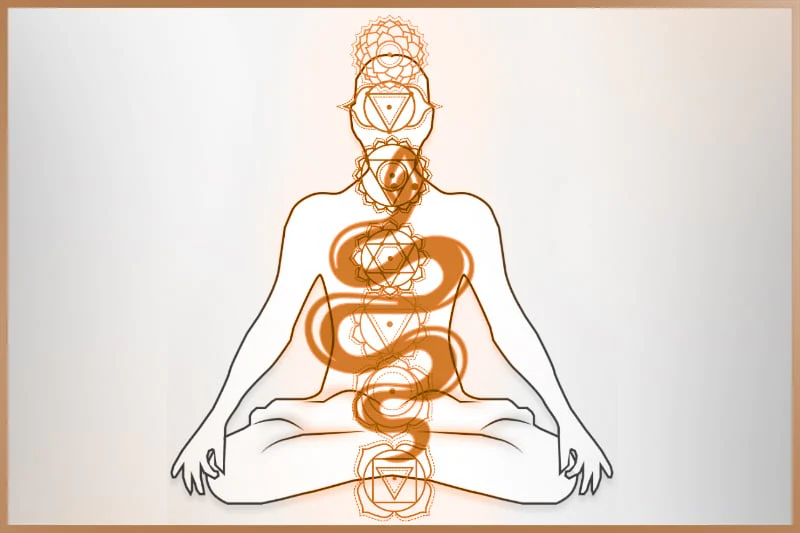
As I perused the comments below her article, I was shocked to discover several other westerners undergoing a similar experience to Collie – very akin to what we think of as a Schizophrenic break – and openly admitting they were looking at suicide as an out. A common denominator seemed to be that their enlightenment had swung severely from deep bliss/mystical experience and then, alternately, a brooding sadness and contempt for God and humanity. Interestingly, I have heard similar things reported after hellish ‘awakening’ experiences on DMT. It seemed that by having their eyes opened to the true nature of human folly, they had abolished any naïve hope for the planet they might have harboured before. Of course, interspersed among these folks’ comments were people who had more moderate symptoms or those who had reached the more blissful stages encouraging the others not to give up!

One author who shares this more optimistic opinion is GS (pseudonym), an astrophysicist who wrote about his extraordinary experiences in an article entitled “Kundalini is my Guru”. In it, he shares how upon arriving home he would lie in bed at which point his body is taken autonomously through a series of movements that ‘align’ and ‘heal’ the places he needs it. Throughout the process, he is given flashes of memories associated with where he received a certain trauma/blockage or an insight into the nature of consciousness. These insights are not always pleasant. Swallowing back a scream of pain, he describes how ‘blocks’ such as his attachment to his wife and child are essentially sent to his spiritual Recycling Bin, along with the ‘trash kept in the heart’:
“Now “waves” go up and down through the back, from the basis of the bottom up to the neck, making snap the bones in the spine. The head rotates at the same time. The feeling is like a “chiropractor” is working on you, not from outside, but from within, adjusting every bone, straightening every nerve.”
Whether or not you agree with GS that this is a good thing spiritually, two things are important to acknowledge here before we go on. A) This is a supernatural experience, by most people’s standards B) Kundalini Yoga is fast becoming a worldwide phenomenon.
If the mantra you chanted at Tuesday morning yoga was about surrendering your body to an energy or entity, would we be as easy about it if we knew what constituted a Kundalini awakening? An invisible hand manipulating one’s body to bring about inner peace and severing of attachments? My answer ended up being no.

With disdain, I used to listen to my mum and other religious peoples’ warnings about yoga positions being related to worship or channeling of energy associated with a given deity. I’d smile patiently, performing my eye roll internally.
She has so much fear!
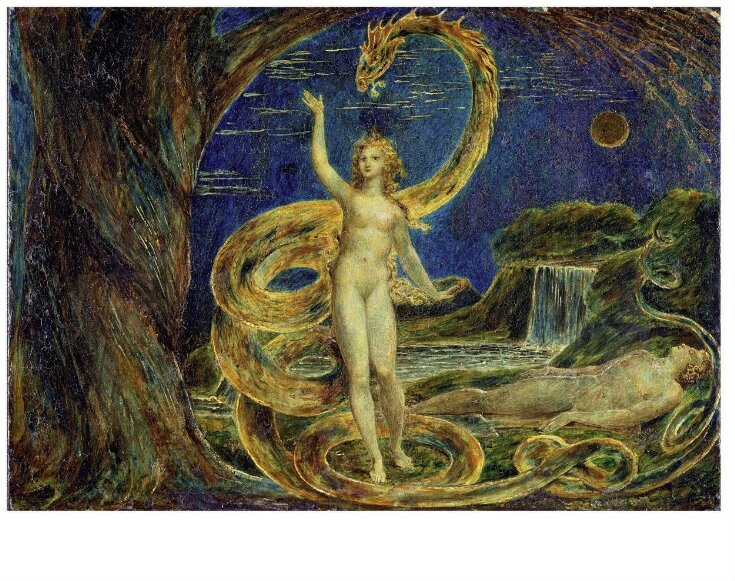
Because the facts are yoga produces amazing things. Mindfulness, being in touch with our bodies, even the coming-together of people to synchronize their minds and hearts through conscious movement, voicing and meditation are all undoubtedly positive! Especially for a society neck-deep in mental health issues and chronic stress like ours. As a counselor, I am in no way deluded about the benefits and actively facilitate these kinds of visualizations and embodied experiences with clients. While I have a healthy caution around the consequences of channeling spirits or any wisdom they have to offer me, I don’t have to regret the move away from over-analysis, stress and chronic unawareness of thoughts/emotions that yoga and meditation brings. The buck stops for me, however, with the general theology behind it; that we are not just made in God’s image, but are gods ourselves. Any suggestion that we have “coiled” within our evolutionary genetic potential, the capacity to be as gods, is for me an extension of the original lie told in the story of Eden.
“You will not certainly die,” the serpent said to the woman. “For God knows that when you eat from it your eyes will be opened, and ye shall be as gods, knowing good and evil.”
Book of Genesis
Because the way I see it is that we are not gods. We have great spiritual potential as the children and stewards of creation, made “in the image of God”, but we ultimately must surrender to something greater. Nor are we alone in the universe. There is such a thing as good and evil. And full expression of our inner children, a moment-to-moment mindfulness, uncovering every personal trauma plus detachment from all earthly relationships, events and desires is not all that’s needed for a better ‘us’, let alone a better world. We must continually strive for righteousness and overcome our carnal, self-focused instincts. We humans evolved to look out for own survival, and that is why I believe we may still need God, or if ‘God’ rankles you…a transcendent collective ideal, and why we always will. Our human intuition will get it right from time to time but will ultimately – like Yogi Bhajan and so many cult and church leaders across time – lead us up self-focused, judgmental and emotionally fickle paths, even with the direction of so-called “spirit guides” like those accessed through Kundalini. As medieval as it sounds, my belief is we must still drop an anchor in our Creator, who is present in every atom of the universe they made and loves it all in a way that cosmically knocks us for six when we encounter it – dead or alive.
I am, of course, under no illusions about the gutting and repression of the world’s indigenous cultures through such ruthless application of good and evil and God’s judgement in the Christianization of the globe. But we take it for granted that alongside the clear abuses and holocausts of cultures, the original Judeo-Christian values sought something different. Mircea Eliade, arguably the greatest scholar of world religions describes the first 400 years of Christianity as a historically unparalleled ‘brotherhood of humanity’: service of one’s neighbour, abolishment of slavery, routine violence and sacrifice and – if you believe Nietzsche – a religion which united us in it’s insatiable pursuit of the truth through science. By getting the western world to agree on one cosmology and a shared definition of truth, Nietzche (by no means a fan of the religion) argued that Christianity honed the intellectual discipline of the west to give us (whatever else we may name it) “progress” and an unprecedented alleviation of human suffering and tyranny.
All this to say, I am aware that the tone of this piece will raise the ire of many disillusioned folk who like me, grew up with the conditioning of a belief system that fell far short of Jesus’ standard and frankly of many indigenous spiritual standards. But I want to suggest it was far from a waste of time either in terms of the cosmological outlook it brought us, where people outside of our tribe were not enemies to compete with but spirit-filled vessels, a shining microcosm of the glory of God summed up in two devastatingly simple invitations: “Love God” and “Love thy neighbour, as thyself”.

I see those of us in the west more and more now as in the adolescent phase of rebellion against our spiritual parent. We have learned of the atrocities committed in their name. We ourselves feel betrayed and in a state of self-disgust. We seek the pulling down of traditional beliefs in the same fashion that a teenager might – in darker moods – fantasize of his parents’ deaths if that relationship was under strain. Christianity and all colonizing religions across time were wrong to indoctrinate; to inflict suffering on people whose sound spiritual traditions had lasted millennia. Far better would have been to seek the common ground as was attempted with (mixed) success in the meeting of Christianity and Te Ao Māori in the first half of the 19th century in New Zealand. But just because a Jewish Messiah’s message of salvation was misappropriated by a race of Europeans with a saviour complex themselves, does this mean we should throw out the religious worldview entirely? On the contrary, I believe secular humanity, on the brink of an economic, ecological and moral backslide, should at the very least be open to the ways in which traditional ideals of individual freedom hand in hand with community service, sanctity and the belief there are realms with consequences beyond this one are more than just ‘opiates for the masses’.
Because the Oprahs, Eckhart Tolles, and Deepak Chopras of our age will tell us that there are infinite paths to God, whatever that means to you – and all equally valid. This feels right to me! How could something so inclusive be so wrong? I’ve wrestled with it and still do. My nature is one that is inherently open, sensitive, empathic. And yet I just can’t roll with any ideology that seeks to sweep good and evil under the rug. A world that foregoes these and relies on philosophy couched as parenting advice to toddlers (‘just don’t hurt anyone else while you do it’) is subject to anomie, to lawlessness. The anxiety and hopelessness that is seeping its way into our hearts and the hearts of our kids are the chief symptoms of this. Indeed, the Enemy – if such a force exists – would seem to desire only this for our world and its peoples: despair. Whether that is brought about in an excess of order (like with something as chilling as the Inquisition) or chaos (the current path of ‘no right or wrong’) matters little to him. Without appealing to God or The Good, I fear we are outmatched by more intelligent and willful powers, especially if – as through Kundalini – we seek communion with them – or just as worrying – act like they’re not there to begin with.

Does it need to be Jesus? Blimey Harry, who is anyone to say whether your idea of spirituality is right or wrong? All I’d say is that we give any worldview a serious once-over before subscribing, by asking ourselves this one simple question:
How do they account for the problem of evil?
Because we have both in us: Good and evil. Evil is twice as likely to strike as good because it occurs at both ends of the spectrum from order to chaos. Joseph Campbell was right in this sense. There is a balance we must strike in the yin and yang of being. The “middle way” described in the myths our ancestors handed down to us is where God (whatever that means to you) is found. And no crusade of absolutes – religious or secular – will suffice. Organized Religion has rightly been brought down a peg from its self-righteous insistence on the sole claim to salvation. Now, as we shift poles from the colonial, masculine and intellectual to the non-dualistic, feminine and heart-based zeitgeist (or “Age of Aquarius”) the ‘woke’ have lifted the mantle of bad religion, insisting that nothing is true and everything is possible. The moral problems we face in the immediate future will not be of tyranny but a chronic loosening of our ties to tradition and reason.
My mum lost many nights of sleep about how deeply into mysticism and psychedelics I’d waded. I chided her then. She swore there was more to our existence than just human beings and our struggle with the ego. That there were higher bidders at the table.
As I type these words, I begin to glimpse that from where her fear comes.
…More to follow…
 jared lanigan