
I remember a couple years ago stumbling onto Gregorian chants – the mystical, millennia-old sacred music of the church. In the particular Spotify hole I fell down, Patrick Lenk was the Composer, “Chant of the Mystics” the album. Mesmerized, I let myself be caught up in the majesty of the layered Latin and bed of synthesizers it floated in upon. And my Spotify Wrapped has never quite returned to earth since…
Veni Sancte Spiritus. Reple tuorum corda fidelium et tui amoris in eis signem accende…
Come Holy Spirit (Holy Breath). Fill the hearts of those who trust in you, and enkindle in them the flame of your love…
Responding to Lenk’s basso-profundo voice, I felt my nervous system come to rest in real-time. Aside from the first three words, and despite a conversational Espanish, I hadn’t the foggiest what was being sung. And it thrilled me. In the same instinctive mode by which we understand Slayer might be harping on about some destructive aspect of human nature, the nourishing spirit (or the numinous) in Gregorian chant cuts out the middle-man of reason and appeals direct to the nous, the part of the intellect primed to receive beauty and truth which this kind of chant is chock-a-block with.
I believe it is this nous, which will lead a culture starved of meaning back to notions of God, spirit and a more communal purpose for living than simply maximizing pleasure or elevating of the individual will as in a lot of modern identity politics and “manifesting” spirituality. Rob Dreher, Orthodox convert and best-selling author recently wrote of this in his unputdownable book Living in Wonder. In it, Dreher highlights – for those with eyes to see – inarguable proof of modern miracles and magic, the rise of UFO Phenomena and the droves of particularly female Gen Z and Millennials pouring into The Occult as evidence that the age of rationalism is done; that the universe is more mystical, connected and infinitely stranger than we moderns have imagined it to be.
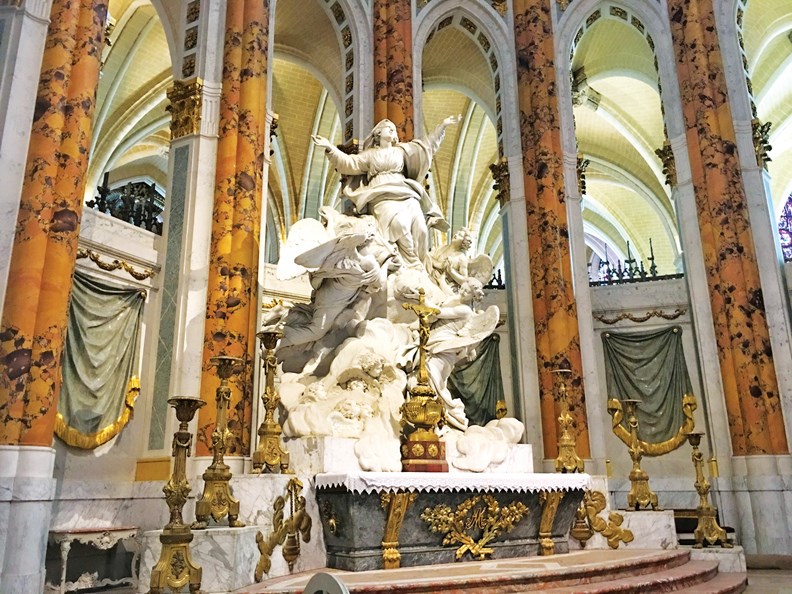
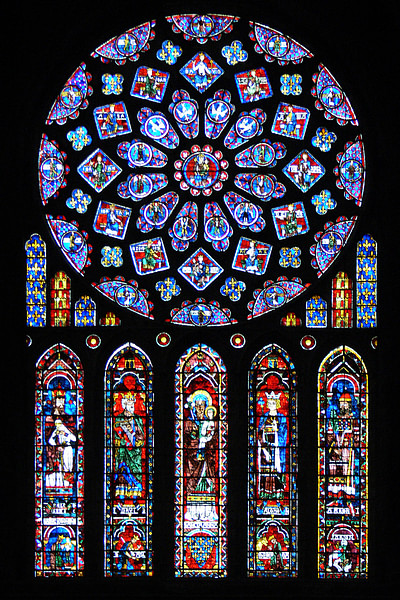
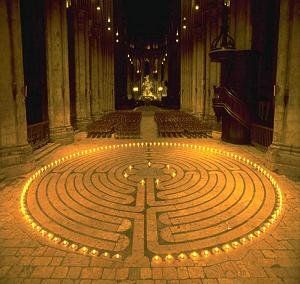
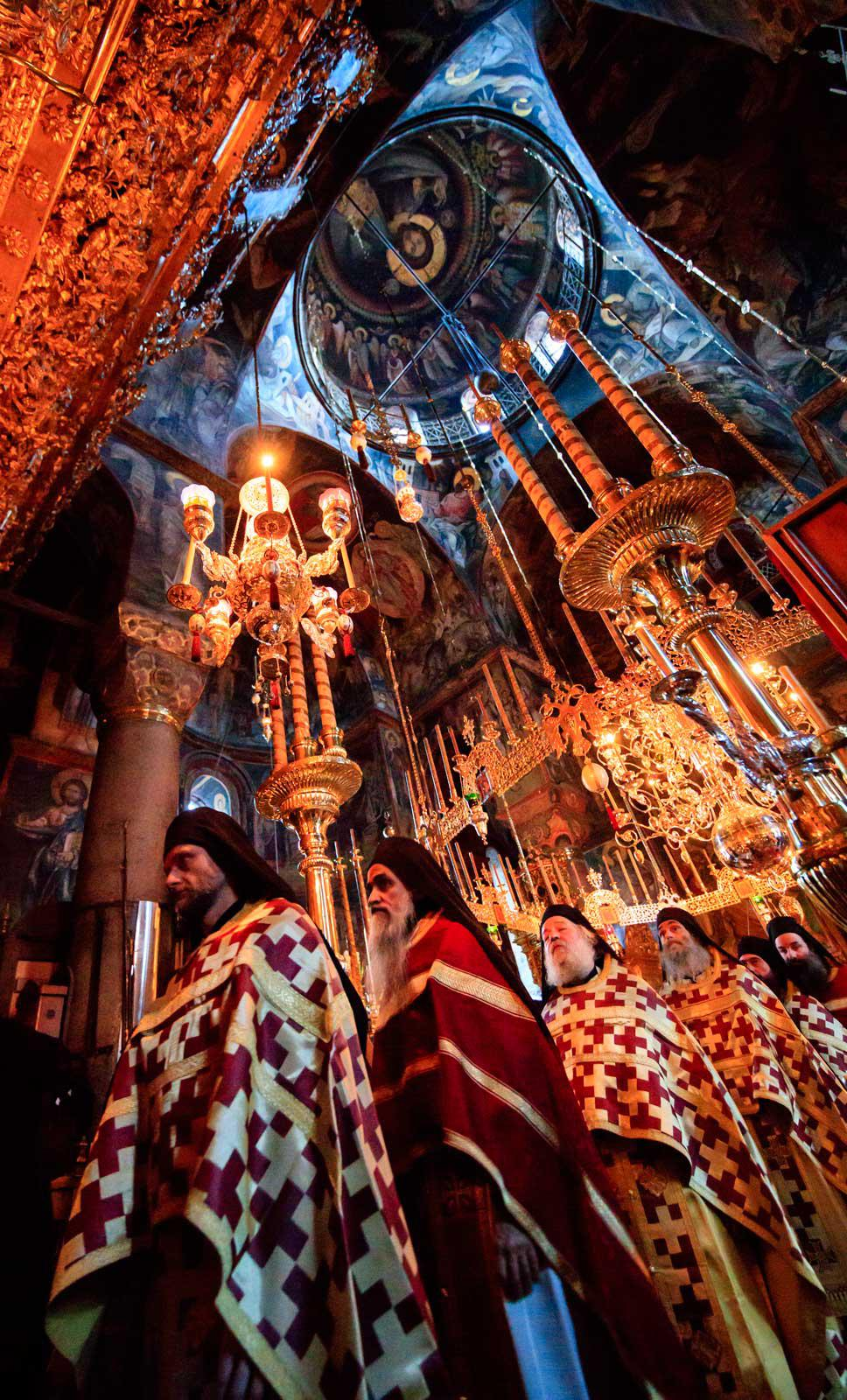
It seems clear that the days of talking people into the spiritual life with reasoned theological arguments alone are numbered. If Christians are to have any leverage at all in a society unfussed about increasing rates of churches being razed to the ground, Dreher argues we must hold to a sacramental worldview where the colours of stained glass in the Chartes Cathedral, the snowy peak of a volcano or polyphonic chant in a language we don’t know all say something of the transcendent; where we acknowledge that it wasn’t the theology of St Paul or Augustine that won the early church their reputation as spiritual jedi knights but the miracles and triumphs over pagan warlocks and witches…
If we allow the numinous to transform us like it did with my chants, might the simple beauty and mystery of the ancient rites, which suggest a universe populated by more than just earthbound life forms, draw people to church when surveying dead matter from the shadows of a hangover on a Sunday morning ceases to appeal?

A recent survey of Orthodox Christian congregations in America suggest this is exactly what is happening. Compared to pre-pandemic levels in 2019, the amount of converts to the faith swelled by 78% in America in 2022, with a significant portion being young men. Johnathan Pageau, host of The Symbolic World podcast, hailed by many as part of the reason for this traditional wave claims that the clergy do not know what to do with the numbers and are being forced to build new churches. In my own parish (a sea of gray hair when I left it in 2005), I have been stunned to see scores of young, healthy families as well as Gen Z men gathering around singing Templar chants and evangelizing a constant stream of newcomers over tea and coffee in the hall with philosophy that dizzies me: a cradle Catholic without a clue.
Because more than just the “numinous” or beautiful, a societal debate around what is held as good or true seems to be being answered with religion too. Watching the Saturday Night Live cast perform a tongue-and-cheek version of YMCA days after a surge of young men helped secure Donald Trump his victory, I can see strain and confusion on their typically wry smiles. How could this have happened? “Young man! There’s no need to feel down!” Yet, speaking to young converts to Orthodoxy, one can see that there is a shift in the spiritual, political and moral landscape that is absolutely underway, which Trump might be just a symptom of, like a stubbornly florid pimple that leads to dietary change.
The reasons these young people report for converting to such an ancient religious worldview include the emotive, subjective nature of modern church services and alternative spirituality which demand little of them, shifting church and cultural beliefs (specifically an emphasis on things like diversity and environment) and a disillusionment with the powerful measures employed by governments and media during COVID.
All I know, is that on that day, listening to an 11th century chant and after 2 years of hovering around the exit of a modern Vineyard church on a Sunday, I had taken my first steps back toward the Catholicism of my youth, a path I’d never in my wildest dreams thought of returning to…
And there was nothing “wrong” or immoral with the church I was at either. I still adore the flow of the praise and worship, the prayer ministry…These things Catholics would do well not to dismiss and find a way to build in addition to mass and the seven sacraments. To experience the Holy Spirit really open up on the highway of a prayer evening and bathe worshippers in its grace is I believe a mark of the true nature of God and what is most nourishing for our own. We are after all, creatures of both embodied ritual and creative freedom.
But in truth I had been a long while wondering whether I would ever feel at home in a service which appealed almost entirely to my emotions or subjective reason. Although it was moving towards the numinous in its contemplative services and liturgical prayers, it wasn’t arresting in the way I felt, bathed in the power of a medieval chant; or structured as in the ritual and 2,000 year intellectual foundation of the Holy Mass.
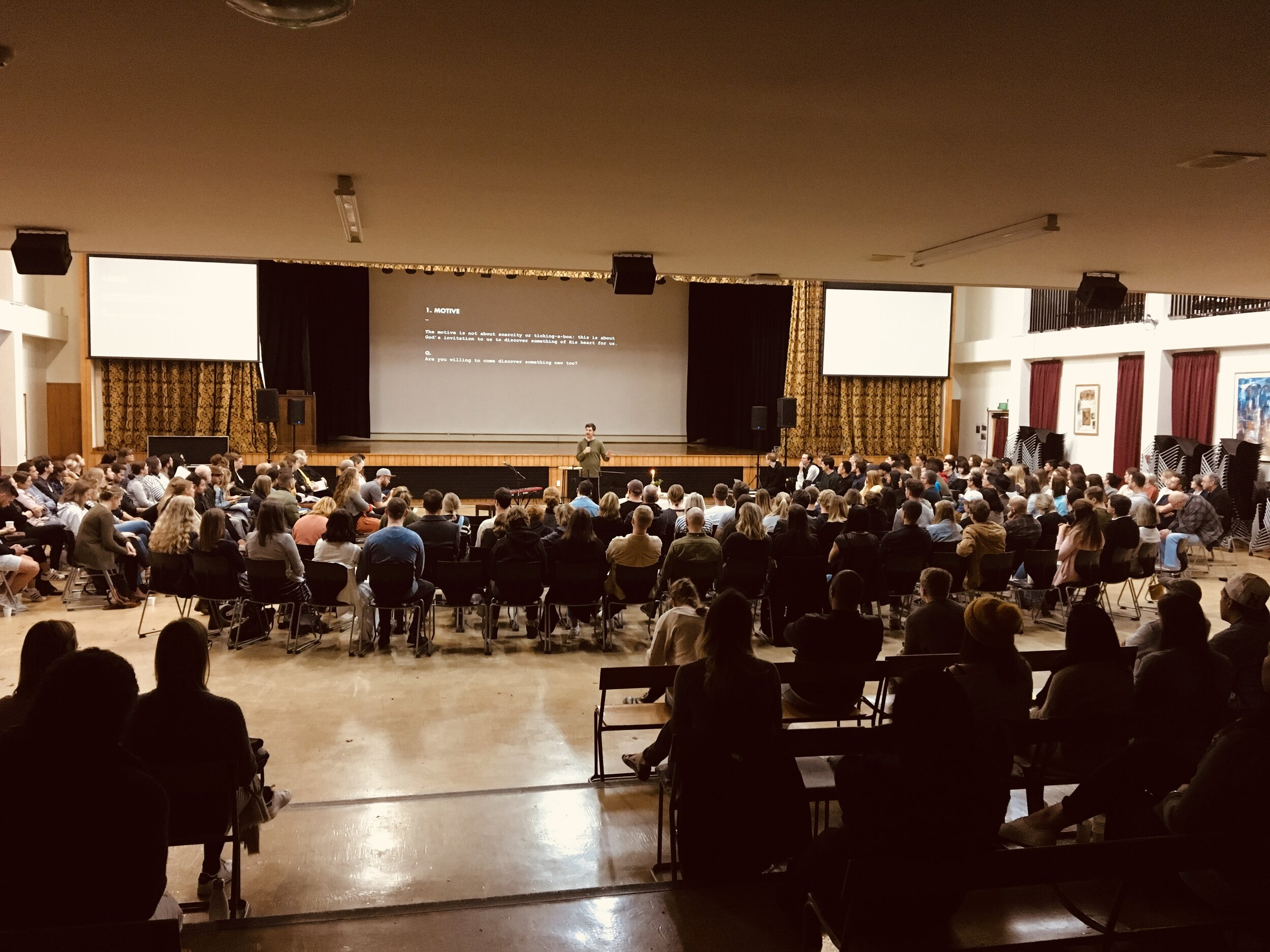
The second issue that arises in a Protestant church (i.e. a denomination of Christianity formed after the splitting off from Catholicism/Orthodoxy/Coptic churches in the 16th century) is in leaving interpretation of the Divine over to the individual. The philosopher Carl Jung – seemingly cashing in on his own prophecy – speculated that the logical end of the Protestant Reformation and dismantling of the Apostolic Church is that everybody in The West eventually interprets God in their own subjective way, opening the door to defining themselves as God which can plainly be seen today in the “spiritual, but not religious” mantra or believing in a looser concept of “The universe” as opposed to a Supreme Being and Cosmic Hierarchy one knows their place within and tries to serve by moderating the will and desires.
I do not believe this new age thought will hold water much longer. In the days to come, if one isn’t connected to an ancient tradition for defining biological, cultural and social notions of what is true and good for humanity, our ability to make sense of the rapid cultural unravelling into “you do you, boo” will flounder. Our limited-bandwidth and animal instincts were not designed to figure the universe out on our own terms but – I believe – designed to worship and surrender to “Something Higher”; to marry our nature to that frequency, not the changing impulses, desires and fears of our traumas and conditioning, which as a social worker I can assure you are becoming more and more impactful as the family unit (like the tribal unit before it) collapses in the pressure cooker of modern life.
A DIY spirituality will, by design, tend to enable or obscure our dysfunctions -particularly the ones we like! – as “part of us”, and remove the need to transcend them. I fear the outcome of such an individualistic spirituality is not a globalist utopia of enshrined diversity and rights, with every community tolerant of the next but rather back into a chaotic stew of the pre-modern world; what French philosopher Rene Girard describes as the universal pattern of pre-Christian myth: a breakdown of mass cooperation into individual and mob violence, scapegoating people whose differences in views and customs we find hateful, and a morality unbound by natural law or reason, in favour of “what I am and want”.
Protestant Christians and The West at large have their reasons for not trusting the Catholic Magisterium or the Pope as anyone can imagine – the scandals and coverups alone deserve their own post – but the devil can be in the detail. I remember as an ex-Hippy and New Ager, listening blandly as churchgoers implied to me Jesus might have been a magic mushroom, invited me to other church services where people shriek out their pain in front of the altar, or the pastors made well-intended but unclear statements about whether or not the church supported the blanket ban on so-called “conversion therapy” for (among obviously untherapeutic and traumatizing abuses) helping folks explore non-cisgender sexuality or gender identity with an openness towards integration of these dispositions into a heteronormative mode for those who desired that, just the same as a therapist might help someone “straight” to explore where same sex attraction or a different gender identity is something they want to express. No one ever suggests banning the reverse, because it’s not the government’s role – nor even the therapist’s – to decide on an outcome for therapy.
Faced with the turbulence of the culture wars and an increasingly hostile politics, I felt – spiritually – like I did when both of my sisters gifted me books on Gnosticism (an ancient but reemerging Christian heresy) and Ancient Vedic Beliefs in the year I became a Christian…for Christmas no less! I just felt as if I had been there, tried that, got the tie-dye t-shirt…I wasn’t interested in a coffee club, or edgy, tattooed Christianity where heresies bubbled away beneath the skin. I wanted something with teeth; Something that would stand in a storm, or at least the open-minded and neurotic storm my creative nature can brew up…
In those moments, what I needed most was an orthodox container to hold the mysticism and deep cosmic symbolism being revealed to me to in Christianity by a burgeoning wave of high profile converts, artists and mythologists-turned-prophets emerging from the secular landscape like Johnathan Pageau, Paul Kingsnorth and Martin Shaw; the universal wisdom for a life well-lived embedded under the surface of the church’s biblical stories, dogma and liturgy; An invitation to participate in the Divine Life with Christ; to ultimately sacrifice on the cross my ego with its various desires; with its illusions about “who I am” and fuse myself to that Higher Order of Being in the wedding of my soul to its Maker.
I didn’t need to convince myself intellectually that this man Jesus was my God and Salvation and that I was going to hell if I didn’t tick this option on life’s feedback form. In fact, all I needed to do was to participate in the life and sacraments of the church and watch what manifested in my nature and the impact I had on the community.
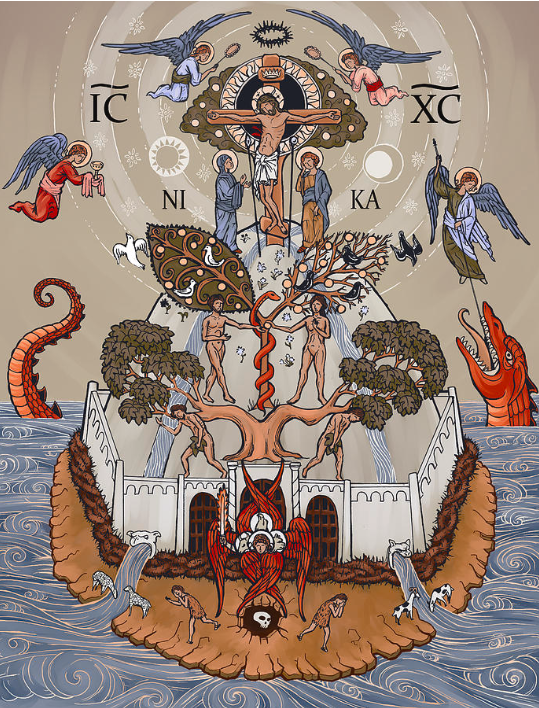
I was starting to realize too that this priceless symbolic depth and emphasis on participation over belief belonged primarily to the apostolic, ancient forms of the faith and not, for some reason, to the church who seemed to want to accommodate my bestie as much as it did me. It’s like ex-Satanist and comedian Shayne Smith says: “we’re not Catholic ‘cos it’s nice. We’re Catholic because the church is true.” Even when I find myself scrutinizing the Catholic take on a given social issue, there is peace in resting in the tradition, when everything considered true or good or beautiful is up for grabs in the modern church, let alone the wider culture.
Around the time I was hanging out in the hall of a Grammar School where Central Vineyard Church held its services on a Sunday, my mum mentioned to me that Holy Family Parish in Te Atatu, – the very same church I had cut my teeth playing drums on the altar as a 7 year old – had become something of a traditional hub: Sung mass, four part medieval choir, sacred art, candlelit shrines and homilies where the priest, Fr Jeremy Palman, said exactly what he was seeing happen in the culture as well as what the church had to say for the 2000 years prior to this century. Alright, alright, alright I heard Matthew McConaughey croon, somehow, someway.
What I participated in there knocked me for six.

That first mass will always stay with me. The clouds of incense. Gazing up at the enormous sacred art and life-sized Corpus Christi above the altar. Statues and shrines full of candles to Joseph, Mary and the Christ Child everywhere I looked. With little idea why, I found myself weeping as I knelt with others to receive the Eucharist on the tongue, while a single voice – for all I knew, an actual angel, I couldn’t tell from the silhouette before the immense stained-glass in the loft – chanted a beautiful passage of scripture from on high…
What I kept returning to afterwards was that the Catholicism of my youth had been – if not a lie – then a jaded facsimile of the riches this tradition once brought the world: the heights of artistic beauty, moral goodness and philosophical truth that could be summonsed in the human heart, inspired by the Divine for 1500 years before the Enlightenment and it’s sister act, the Protestant Reformation, which sought to – as much as possible – modernize the sensibilities of church services and gut anything too “superstitious” from its rites.
In the West, people have voted with their feet on a sanitized, sensible Christianity and chic-modern, coffee club services, and we shouldn’t be coy about the result: we are living in a post-Christian era. CrossFit and Psytrance festivals are frankly just more popular. The choice left to the modern church is to either board the ark or learn to swim in a secular springtide.
 jared lanigan