
Although I didn’t mind attending Catholic mass as a kid, without the fullness of the ritual or mystical understanding of what was happening in the central sacrifice or how that was remotely relevant to me, sitting in the pews on a Sunday was – often enough – a real tag itch in my butt.
As I write that, I can hear the murmured agreement of thousands of lapsed Catholics in New Zealand, rising like incense we smell but don’t care to remember.
In fact, during the late 1990’s and early 2000’s, the doors of Catholic and Protestant temples alike were being blown in by a reductionist and worldly wind that had been whistling around the eaves for at least a century…
When conservative talking heads today throw their hands up in the air (if they notice) at all the droves of young people in pouring themselves into the occult: psychedelics, witchcraft, and divination, my own response is that of begrudging non-surprise. For how could a church, so weakened and diluted in the attempt to “make Christianity cool again”; the skate ramps and ska bands, the tea cups and TED Talks, possibly hope to compete with the embodied experience of the sacred (or at least spiritual) in the harrowing reality of a Kundalini Awakening, casting spells on potential lovers or the magical ego-annihilation one experiences on a couple of grams of magic mushrooms?

By trying to keep pace with the New Atheists (some of whom now – if they haven’t converted – are more sympathetic to Christianity than ever) and rampant, empty materialism, the church of the new millennium chose to gut itself of all beauty, mystical flavour and experience of God it once knew and was now preaching and reaching zombie-like toward already spiritually squeamish youth, over the bench full of viscera it had attempted so vainly to nip and tuck.
“Mmm, ya hungry?”
That someone like the stigmatic saint Padre Pio, who bore the crucifixion wounds of his God, levitated, allegedly shooed away American bombers during WWII, and nightly wrestled with the devil himself waking his monastic brothers with a hiss and a roar were frankly speaking, embarrassing for a church who – like a co-dependent lover – was desperate to win back at any cost, the hordes of educated moderns it was haemorrhaging.

What, I asked myself, might a young Catholic Jared have done with the fact that the Virgin Mary – again, verifiably – had been appearing in the ethnic likeness of her earthly children around the world for as long as the church existed, causing the sun to dance (the biggest ever publicly witnessed miracle), prophesying about world wars and calling entire nations to fasting and prayer?
In my youth, I had it implied to me that Mary’s queenship of Heaven and Earth was something like clerical overreach; a severe case of Chinese Whispers which started at the foot of Christ’s cross and ended at the first council of Ephesus some 400 years on in an atrociously heretical crescendo for supposing that the Theotokos or “God-bearer” could play more of a role than just a willing pawn on a chessboard.
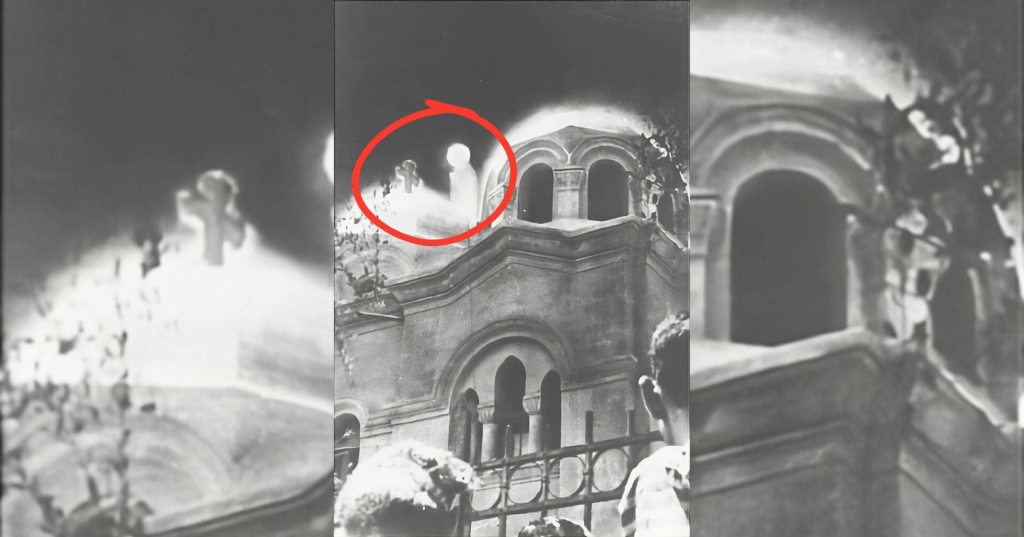
That Our Lady’s role within modern Christianity has been diminished to that of a merely submissive woman is no coincidence, when we consider the cultural and artistic desert the church has become. The sacred feminine (which Catholics and Orthodox hold Mary to represent through unreserved obedience to the Divine Will) was – for as long as religion has existed – evidenced by the mysticism, the creativity, the “body”ness of religious practice. Things that are all but dead in the socially awkward services, judgemental personalities and tokenism of many Christians today. Or when creativity arises it flows dangerously along heretical channels.

Try asking your average Catholic in 2025 which feast or fast is being celebrated in their liturgical calendar, how to discerningly venerate and ask for the prayers of the saint of the day, (a holy hero or heroine patronizing an aspect of culture or nature that they had something to do with during their earthly sojourn), or when the last time was that they fell on their face before the Eucharist, the mystically converted Body and Blood of God Himself, at once representing Christ’s sacrifice as well as the consummation of – and consumption by – His new body: the community of believers who lay down their lives in service of the Other and join their sacrifice to Christ’s in holy unison, becoming what they worship in the divine Wedding Feast of the Lamb.
The odds are that they will draw blanks!

Or take The Divine Office for example: the prayers and psalms of thanksgiving, praise and petitions chanted on the hour by billions of Catholics throughout the centuries all but forgotten; The public processions on Feast Days, with the clergy attired in holy and dapper garb, now practically invisible; The untold amount of folk-traditions for protecting home and hearth such as burying crystals of blessed salt in the four corners of a property with Saints’ medals or the engraving on doorways with sacred chalk, the initials of the three magi during the Feast of The Epiphany; Or how on St Lucy’s Day, my Swedish ancestors dressed the eldest daughter in white robe and red sash for Lucy’s purity and martyrdom, crowned with candle-lit greenery and accompanied by her “star boy” brothers with hats and wands to serve the family traditional treats during Advent – all furtively suppressed as the centuries went by lest any intellectual types noticed…because perish the thought religion might be anything other than reasonable!
And astride the scientific revolution, the church of biblical literalism took its first shaky steps: “We’ll keep our 6,000-year-old earth dinosaur-free thanks very much but for God’s sake don’t let them find out about the rosary beads! It’ll be our ruin!”
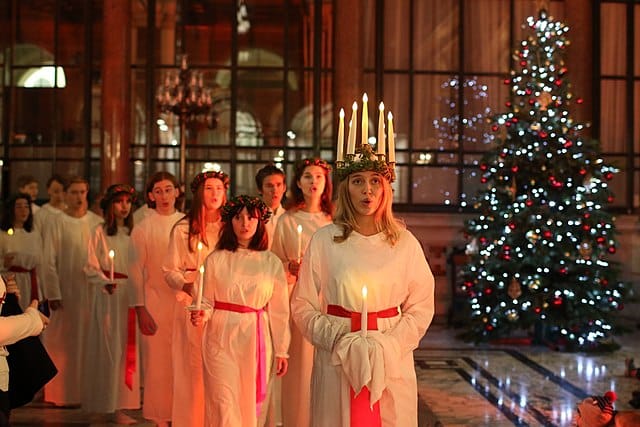
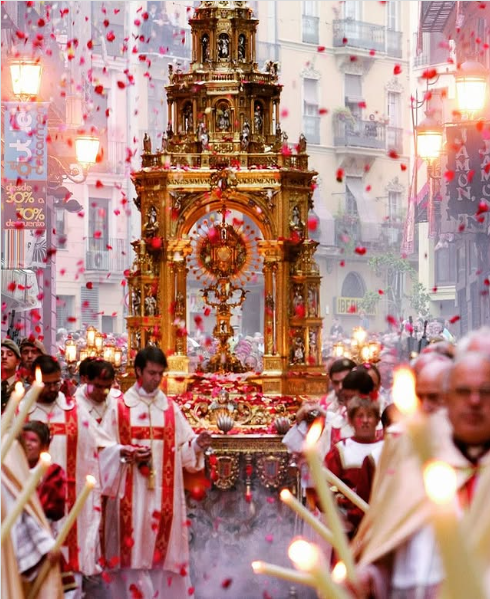
These and uncountable other customs wiped from the face of modern religious life in a bid to render the faith amenable to the sensibilities of a post-Woodstock world, drowning in the springtide of a secular flood which would come to shipwreck the traditional family, community and value systems upon the shores of – on the one hand – a ruthless and religious commitment to scientific reason alone and on the other, a moral licentiousness with which the sexual revolution had, in bacchanalian stupor, so successfully sedated the Baby Boomers, emerging from the puritanism of American Christianity and the trauma of a pointless Vietnamese War.
The knowledge that Hitler and his highest serving officers had been carrying out the rituals of and consulting ancient indo-aryan gods admittedly might not have stopped Californians from “turning on, tuning in and dropping out”, but in hindsight the vicious social engineering of a godless communism and fascism in the East and the chaotic opening up of sexual and psychedelic experimentation in the godless west might have worked more in tandem than could first be assumed.


Certainly, the well-intended but incomplete notion of Humanism, that people, given enough love and encouragement, will always turn out inherently good and that no external hierarchy or mediator of the divine aka the church was strictly speaking necessary for the enlightenment (note the pivot away from the salvation) of Man, was only too familiar to the hemispheres on both sides of the Atlantic.
The Jesus revolution of 1960’s America did, with some success, carve out a genuine cultural alternative to the Flower Power sweeping the streets at the time, even forming the Vineyard Church movement I once attended. Marquee worship, the charisms of the Holy Spirit including prophecy, prayer ministry and modern worship integrated with kirtan-like mantra was in my opinion, a genuine spiritual movement, fuelled by the creative, intuitive fruits of the Holy Ghost. The Catholic Church, flooded with spiritual FOMO, sought to board the ship that was leaving and the exciting “Charismatic Renewal” was welcomed kicking and screaming into the world.
That the true God might have been present in both the scholarship, sacraments and enchanted cosmology of the medieval church as well as the fruits of the Holy Spirit which in the 60’s blew into the church like a wind “where it pleases” was lost on the generation of my parents, who assumed that in a post-Vatican II world, the only way out was down and the slow but sure surgery of tiresome tradition and superstition could be begun in the hopes of forming a brave new world and Christianity which would become – much like a chihuahua walked in and out of the grounds of Eden – all emotive bark and no bite.
…to be continued
 jared lanigan