
If the higher interpretations of scripture are symbolic as we’ve talked about in previous posts, did someone like Jesus even exist? If the resurrection didn’t happen as Paul said, is not our preaching “useless” and our faith “void”?
I believe this is what trips up secular and Christian folk alike. Once they see the film Zeitgeist or The Da Vinci Code and realize what the symbolic nature of Christ’s life reveals about each of us living a meaningful life and that his sacrifice has been (imperfectly) present in traditions other than Christianity or the cosmic vision (map for reality) hidden from them by the modern church in its Augustinian emphasis on salvation over theosis, they understandably assume that Jesus of Nazareth himself must have been a fabrication or at least an unwilling poster boy.
That God sent his only begotten son to sacrifice himself for everyone else reads like something out of a more wholesome Odinic or Dionysian myth. Yet that is the strange, compelling magic of the Christian claim. On the beams of the cross we say, heaven and earth, spirit and flesh, principle and embodiment, myth and history all meet. In His person, all such opposites are reconciled and as C.S. Lewis writes, all world mythologies are brought to their fulfilment; In His principle of voluntary, innocent self-sacrifice, we find fiction breaking out into spacetime and myth infecting reality; In His resurrection, humanity finds a new way of being alive.
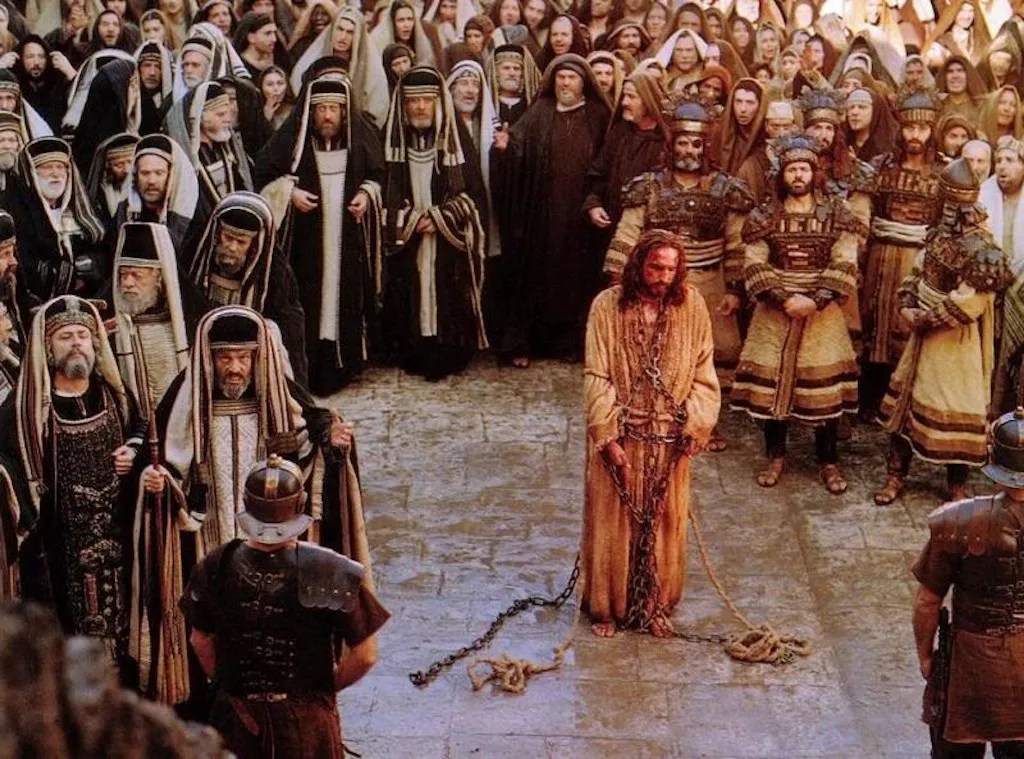
Christ’s sacrifice happens, and history is never the same…in his dying and rising, the taken-for-granted processes of the carnal, egoic world are turned upside down and death itself “starts working backwards”. The King on a cross scandalizes every self-respecting idea about Divinity; about what is ethically desirable in the ancient world. Why would people worship and follow in the footsteps of someone who willingly lays down their life?
Pagan mythology veritably depended on the collective violence of the mob being justified and the scapegoat victim not just staying physically dead but condemned in order to bring about the birth and renewal of civilization. So how on earth would something as outrageous to the Greek and Roman palate as worshipping a tortured and murdered God catch on like Christianity did? Why the apostles that knew him and early Christians in their thousands marching proudly to their deaths unless the righteousness and resurrection of such an innocent victim meant something so profound, so absurdly true?
People will not die for just anything and never for a lie.
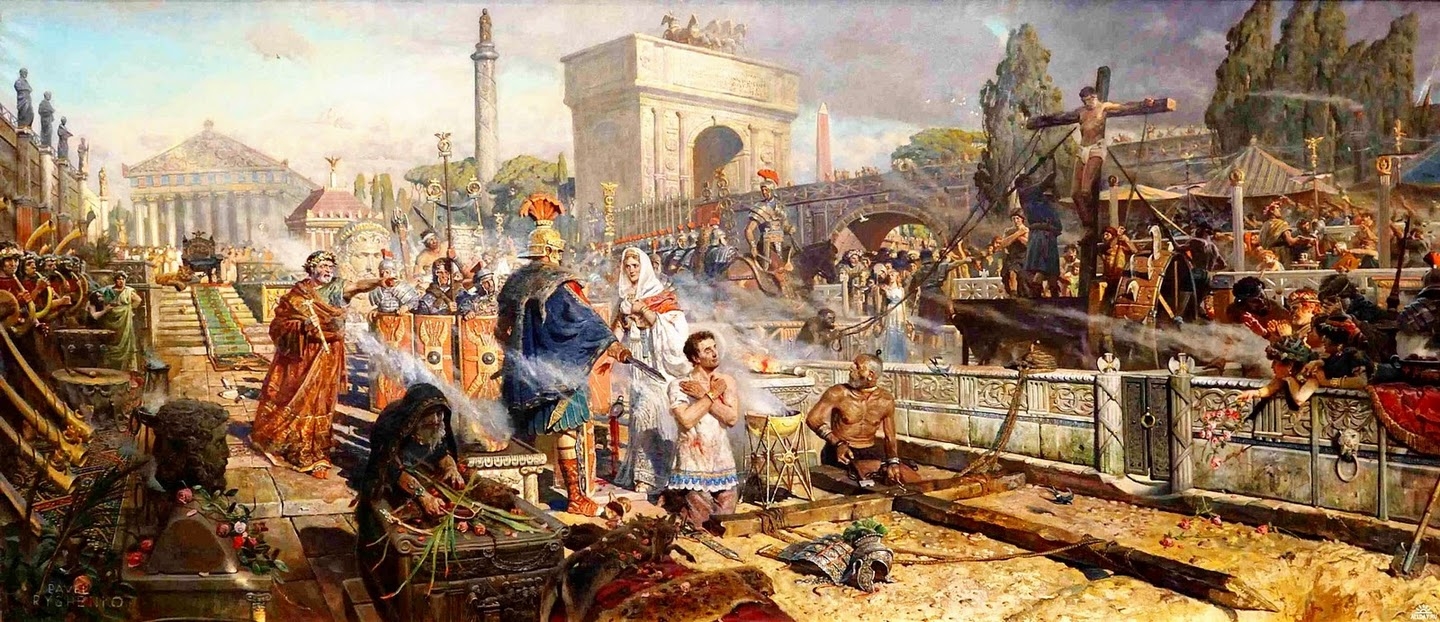
And this is Christ’s sacrifice at its core: that the transformation of a heart, of history, of human destiny only comes when we hand over what is nearest and dearest. The world is so busy magicking away inconvenience it has forgotten that Reality doesn’t just include suffering, it functions because of sacrifice. Why does the fruit have to fall and rot for the seed to flourish? How do parents lift cars and endure schizophrenia-inducing sleep loss to protect new life? Why, against every voice screaming in your head, do you haul your ass to the gym, commit to a degree, love someone when they haven’t actually deserved it?
The Gospels are not just Good News because we are changed – redeemed – by God’s grace but because they point to a deep and mysterious truth about The Incarnation: That all of us are born to become Christ to the world and by dying to self, aligning ourselves with The Law and becoming alike to the Divine (a process Orthodox Christians call Theosis) we redeem the sins of ourselves, our parents and – like Jesus – those around us who let us down, traumatize, mock and belittle us when we haven’t deserved it.
We too are called to perform miracles, to heal the “sick, deaf and blind” through the corporate, fractal nature of prayer and meditation on what is holy and ordered. Leveraging the fact that consciousness informs reality, we pattern our lives and make our sacrifices according to the Holiest One; take our place in The Great Dance of Being and the world cashes in on our sacrifice. We improve our little corner of the world through suffering for it, not because it’s fair or safe, but because it’s the right thing to do.
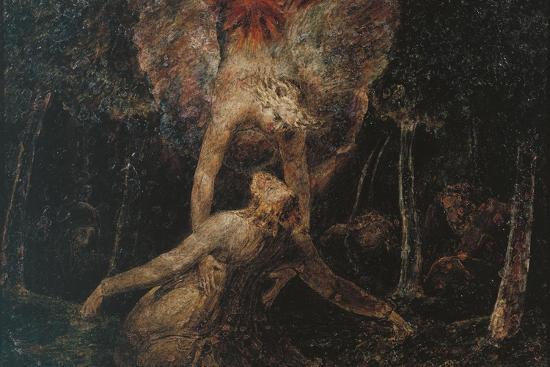
Christ both communicates the nearness and love of our Sacred Source for our material bodies and fractal selves (our diminutive and derivative logoi of The Great Logos) by coming and dying in one, but also the road map by which we too may enter the Divine Life.
You will have heard that you are what you eat, well, you become what you worship and everybody is worshipping something so – regardless of whether you attend church – is it Christ in your case? And if it isn’t “self-sacrifice for the good of truth and love of The Other”, which god will do? Their name is Legion, for they are many: success, wealth, healing, escape, social justice, safety, control, tech, family, self, balance, identity, power, expression, science, pleasure…
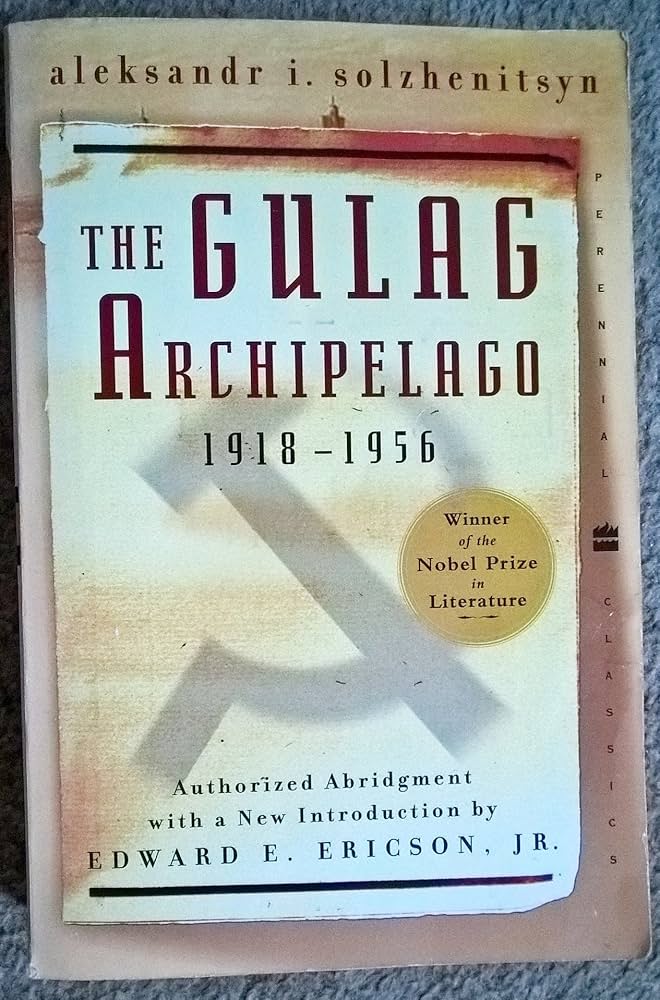
Some gods are worthier than others, of course, but modern history tells us what happens to a culture where these take the place of The Highest Good. Stalin’s Russia, Hitler’s Germany, and Mao’s China are all pinnacle examples of knocking God from his throne, abandoning the cosmic hierarchy and attempting through science, technology and sheer political might to create a humanist utopia.
And make no mistake: the western world is now in the process of trying again. But as much as a secular socialism is being hailed by our academic and political class as an ideal, the result has only ever been bloodshed, and a chronic loss of meaning.
The great tragedies of world mythology too, tell us there is nothing new under the sun; that the horrors of the 20th century weren’t firsts for humanity. As in the cautionary tale of Eden, we have ever reached for divinity and control before we’ve earned it; to define our own moral order rather than submit to the transcendent code enshrined in the world’s religions: Prometheus brings us vice, technology…and Noah’s Flood; Fenrir devours the gods…and the Tower of Babel lies fallen.
The choice is ours whether we submit to Something Higher; whether we make a sacrifice of our time, energy and talents for others, but the consequences of that choice are shared. I believe that to make a God out of anything else, order, freedom and the flourishing of life on our planet will come under threat: In an earth raped and poisoned, in speech and freedoms suppressed, the reproductive mode of the family unit looked upon with suspicion or as merely one among many, our children’s health discarded, their bodies irreversibly altered, rising rates of identity confusion, neurodivergence and meaningless despair, in the spectres of fascism and communism, of a return to appalling rituals of sacrifice and avenging violence. We inherit the sins of the many, as Christ did.
And our way must be His, to have even a sniff at redemption.
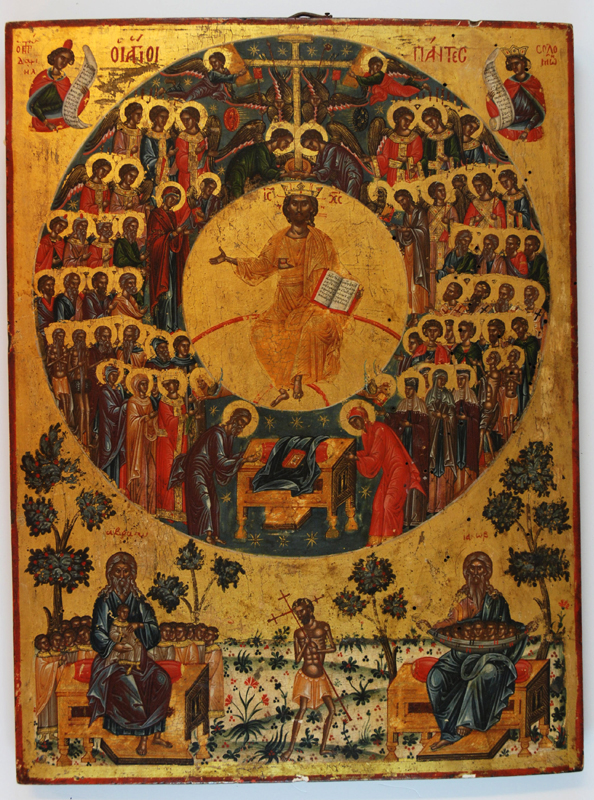
Now, if you are a Christian reading this and it gives you the willies, my encouragement would be to go back and read the saints, in particular the martyrs, mystics and church mothers and fathers and what they were trying to achieve out of overwhelming love for Christ, whom some of them knew not just as an abstract “friend” but a brother of flesh and blood calling them forward into His Divine Nature which he claimed was not only now possible for them to achieve but that they would accomplish “greater things even than these”.
God has a body, and you are it.
Christ reveals what it is to be fully human and fully God, our original unadulterated state in The Garden. Through Him, we see how we may fill our purification jars – our arts, science, politics, community and conduct: every human endeavour – to the limits of our capacity and then surrendering our handiwork to the Divine, have our water turned to wine.

Through Christ, we come to see the human body as microcosm, a pattern in miniature of the universe He created and through The Incarnation, we are to be the fulcrum on which it spins; The witnesses to and stewards of all creation.
Brain-heavenly dome, limbs-branches, extremities-planets which orbit the heart-sun of our galaxy with feet-roots which move to the music of the spheres, setting in motion thoughts-principles and – mirroring these – principalities; heavenly bodies-angels (and devils), guiding our path in response to the stars-saints-ancestors we choose to bend our prayers and will towards in the Great Hierarchy of Being.
Christ, The Head of this Hierarchy; the same force which births us is right there with you in His handiwork, reading these words as you do. Like a Father watches over his children and lovingly monitors their activity, He desires nothing more for his kindred, made in His image and remade in His sacrifice – His very own flesh and blood – than to grow, challenge ourselves and fall ever more in love with each other, life and The One who gave it us.

The Ancestral analogy is perfect. For if you are the prow of the ship, and your ancestors the beams and hull, then the church or mankind is the ark, the Body of God here on Earth. God is not the sea as you might suppose, but the painter, the composer. He is not all of nature, as He is taken to be by the pantheistic New Age, but Supreme Being which animates it (panentheism), Holy Ghost in The Machine of whom we are a fractal; egoic yet perfectible image.
And He wishes for us to join Him – through Christ’s self-sacrificial “Way” – in The Song of Creation, that endless, thrilling current which courses through us in the moment of climax, when we lose ourselves in The Other, when we love them as ourselves…even unto death. That is the love he bears us.
And there is no greater love than this.

Many cultures and traditions have claimed something like this but the difference today between a mere spiritual window-shopper and choosing to pick up your cross as a Christian is that the former seeks to elevate the self, it’s “felt sense” of the truth and to revere the passions (individual wants and needs) as “natural” and therefore “moral”, at least in a relative sense: “You do you, boo. Just don’t hurt anyone else along the way.” Christians on the other hand, are to transcend their own and the world’s programming, not to revel in it as something we fundamentally “are” but to put on the Mind of Christ which entails surrender to Something Objective and Higher, like Our Lord did repeatedly.
Mooji, Eckhart Tolle, and Osho all claim godhead is already ours and offer various mindfulness techniques to overcome ego and realize divinity. The Saints – while not entirely different from these in their quest for theosis – were continually humbling themselves. As holy as they were, to a person they only fell further into humility as awareness of their limited, subjective and traumatized ape minds dawned and they continued to fall on their faces at the feet of His objective and almighty Reality, realizing how lost they were, how helplessly disgraced any of us are, in the absence of the Good Doctor.
If your church is telling you, however, that you are god already and all you need to do is remember the fact; to stop judging and blaming yourself like those tiresome, bible-bashing fundamentalists, then I would grab the newcomer’s chocolate and leave. A spirituality which demands nothing of us, which tells us simply to wake up Christ sleeping in the bottom of our boats and unleash our inner god or goddess is a false religion.
This is, I’ll admit, a treacherously hard difference to discern, especially when the lumbering everyday process of sanctification preached – at times – severely from the pulpit can feel so confronting, and well…uncool, but there is the task before us: self-actualization as Abraham Maslow would describe as our final need and end, or self-denial like Christ, embracing the redemptive, transformative nature of our suffering with a righteous spirit and joining our bloodied steps to His on The Way to Calvary.
The divine nuptials which await us atop the cosmic mountain are beyond words to describe but our crosses must be carried there. And yet, despite what our world insists, we don’t have to walk alone.
For the way is narrow, but “His yoke is easy and His burden light”.

…to be continued
 jared lanigan