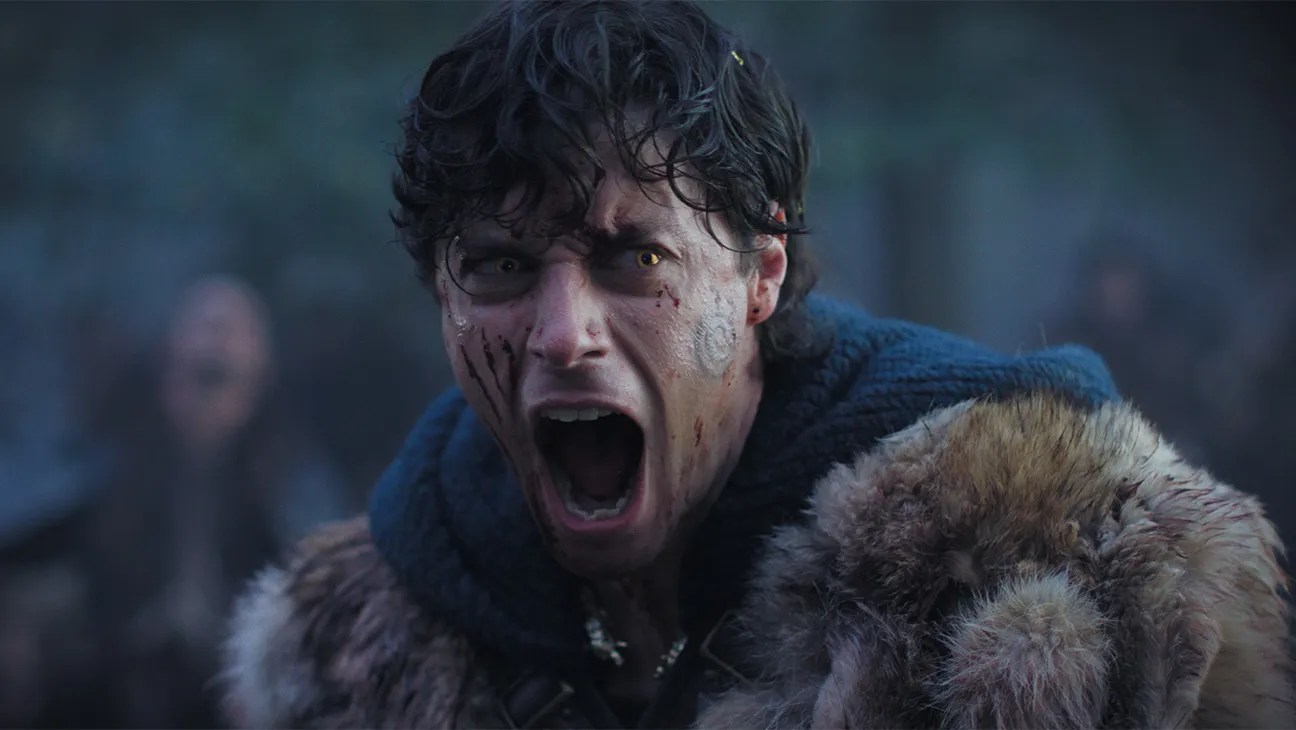
If you thought Western Myth died with Tolkien, think again …
I just finished watching The Pendragon Cycle: Rise of The Merlin, and it is gripping.
I barely ever write reviews but thought I would make an exception for Rise of The Merlin seeing that major reviewers haven’t bothered with it (Rotten Tomatoes doesn’t even register a critic’s score next to its “certified fresh” audience rating of 86%) except for a handful of disparaging youtubers and breathless reddit threads because – trigger warning – some of the 5th century characters are Christians, and because it airs exclusively on Ben Shapiro’s Daily Wire+ channel.
Yet while politics may literally assassinate the characters of public figures, cancel comedians and upset Christmas Dinners, I can’t believe it will prevent a fantasy show like Pendragon from succeeding when it is this good.
And boy, is it good.
I know we are all still trying to forget, but do you remember how badly you hoped The Rings of Power would work out?
Rise of The Merlin, on 10% of Amazon’s budget, sits that show on its ass on almost every front…
I watched Rings of Power faithfully to the end of the second season, hoping against hope that Jeff Bezos and his team of AI writers might turn back the runway train they had so expensively built. Not so. But The Pendragon Cycle has given me great hope for the future of television. Specifically, the kind of fantasy which looks to our myths and history to offer a collective vision for the future.
The characters, especially Merlin, are enrapturing. The dialogue as poetic as the source material. And the steel and hoarse cries of the ruthlessly realistic battles clang about in your ears long after the scenes fade and their credits roll.
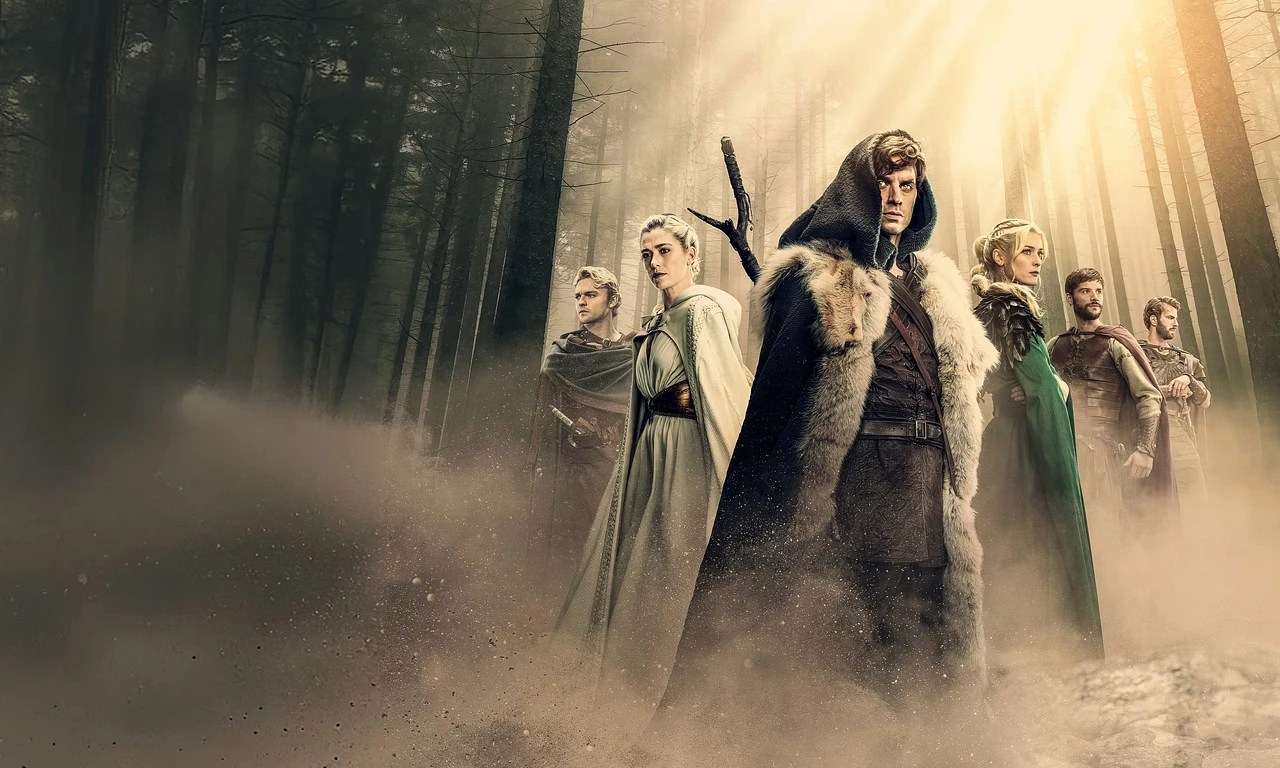
It is also incredibly ambitious in the different cultural threads it weaves into the central tapestry of narrative.
Somehow the “fair folk” of Celtic legend, Gentry, Atlanteans, descendants of Roman Centurions and hordes of vicious Vikings all come together to tell the story of how the motley kings of Britain fought off the waves of “barbarian” invaders in the 5th century.
The larger tale of Britain’s sovereignty swirls around the birth, life and madness of its titular character Merlin. Tom Sharp’s portrayal of the hawk-eyed bard is one part post-traumatic stress disorder, one Christian mystic and another, virtuous king in The Island of The Mighty. As in the medieval retellings of King Arthur and his Wizened Mentor, Pendragon’s Merlin is a Christian, but in a way that doesn’t bash you around the head with The Good Book.
He constantly doubts, rallies against the catastrophic loss and demons in his head, and haggardly performs breath-taking miracles which bring to mind Christ Himself rather than a mere follower of his.
But it has to be said that the showrunners, like Stephen Lawhead (who wrote the original novels) are unapologetic about what was incredibly likely to be the case: that Britain was a Christian Nation very early on after Rome came, and the kings and warriors, maidens and mages all would have been finding ways to blend the nature worship of their forebears with the sovereign power of Christ which pierced the darkness of violent tribalism, black magic and blood sacrifice in The British Isles and threatened to bring about what Taliesin, Merlin’s father prophesizes in the second episode as The Kingdom of Summer:
“I have seen a land shining with goodness, where each man protects his brother’s dignity as readily as his own, where war and want have ceased and all races live under the same law of love and honour.”
Here he is describing the New Jerusalem. An ideal which until recently was a distant yet imaginable goal in our world. But now with looming environmental disaster, polarization in public life and a return of nature worship, fascism and moral relativism, it feels as if the long, dark night is bringing down the curtain on the intimations of Heaven on Earth that our ancestors bled and died for, the same ancestors who would turn in their graves at the giddy consumerism and breaking apart of community that so devastatingly sums us up in 2026.
The show feels like a battle cry, like a hearkening back to a time where beautiful, powerful queens bound communities together and asked severe questions of their champions and kings, who together delivered their people from sorcery and division, or for whom it was an honour to die trying.
I know most people will not touch a Daily Wire membership with a 12-foot barge pole for its associations with conservative media, but I simply cannot see this fantasy series as conservative. I wouldn’t even call it “faith-based” like some have tried. Good art is not conservative by definition. It has to rattle your presumptions, or else no one would bother with it.
The Pendragon Cycle by contrast, feels instantly iconic.
And besides, what if it were conservative bards that we needed? I use “conservative” very loosely here to describe people interested in the old stories and mythic traditions. In a world beset by despair and addiction, conflicting truth claims about nature itself, and ritualistic child abuse in our highest office…do we imagine that it is more Drag Story Hour in our libraries that will see us through? That all we are missing is just one more opportunity to “be kinder” or “leave well enough alone”?
We will always need to show greater kindness of course, but kindness alone is for playcentres.
What I think we need more than ever is revival of the old lore, the ancient stories across cultures which shaped us, because if not, our society founded on universal truths that brought together such a kaleidoscope of peoples, will descend into a cesspit of vice and in-fighting…if it hasn’t already.
Yes, this is a “white” story, but it is not merely a British one. There are, as mentioned, multiple races represented but more than that, the story is so archetypally written that – like Pakiwaitara Māori, Aboriginal songlines or Celtic fairy tales – it speaks not just to its context but to the hearts and minds of humanity at large.
The Pendragon Cycle reminds us that if we can cast aside our fear of neighbour and bind ourselves to a higher good, then the sky is the limit for man. It reminds us that the boundaries of a kingdom matter and are worth defending, but so is bringing people mercifully into the fold, and asking them to agree on what makes us, us. That love is not merely including someone and affirming their rights, but to expect sacrifice, and responsibility too. That truth matters. To the core of us, it matters and love without truth is not love.
It is a caricature of love.
Shows like Rise of The Merlin matter, even when they are produced by dweebs like Ben Shapiro because they show us the path out of the madness society is gagging on.
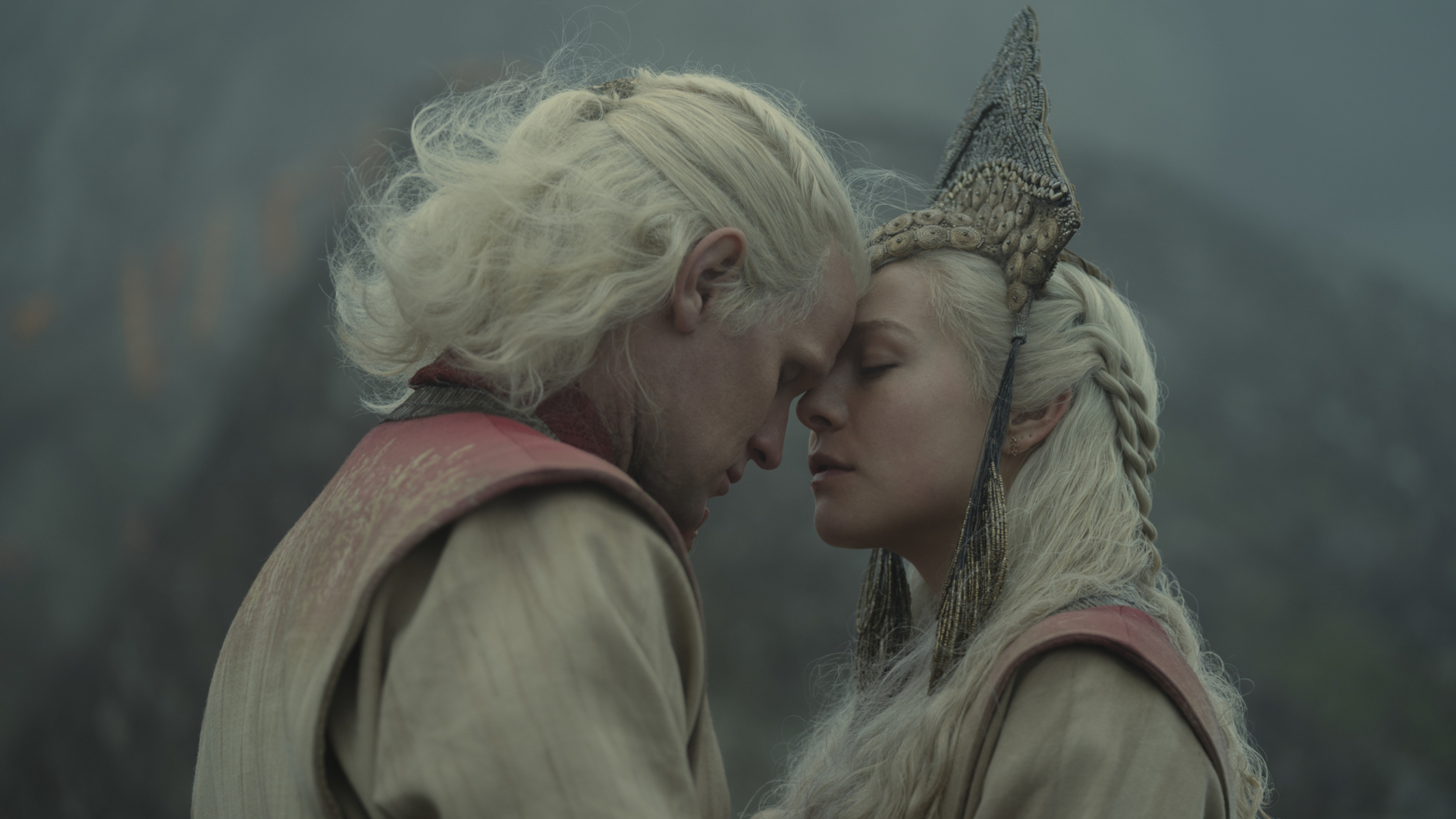
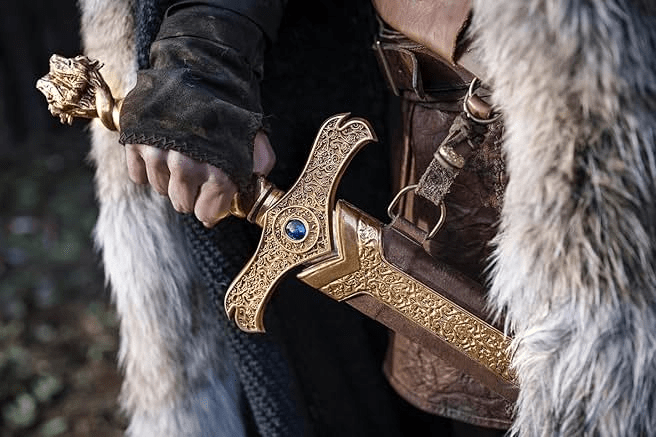
In all honesty, the show has its cumbersome moments. Places where the modest budget shines through. But the show’s soundtrack is sublime and worthy of Howard Shore, the costumes (whilst I spotted a handful of plaid jackets in the first episode) are broadly gorgeous, and the weapons so majestic they are like characters of their own.
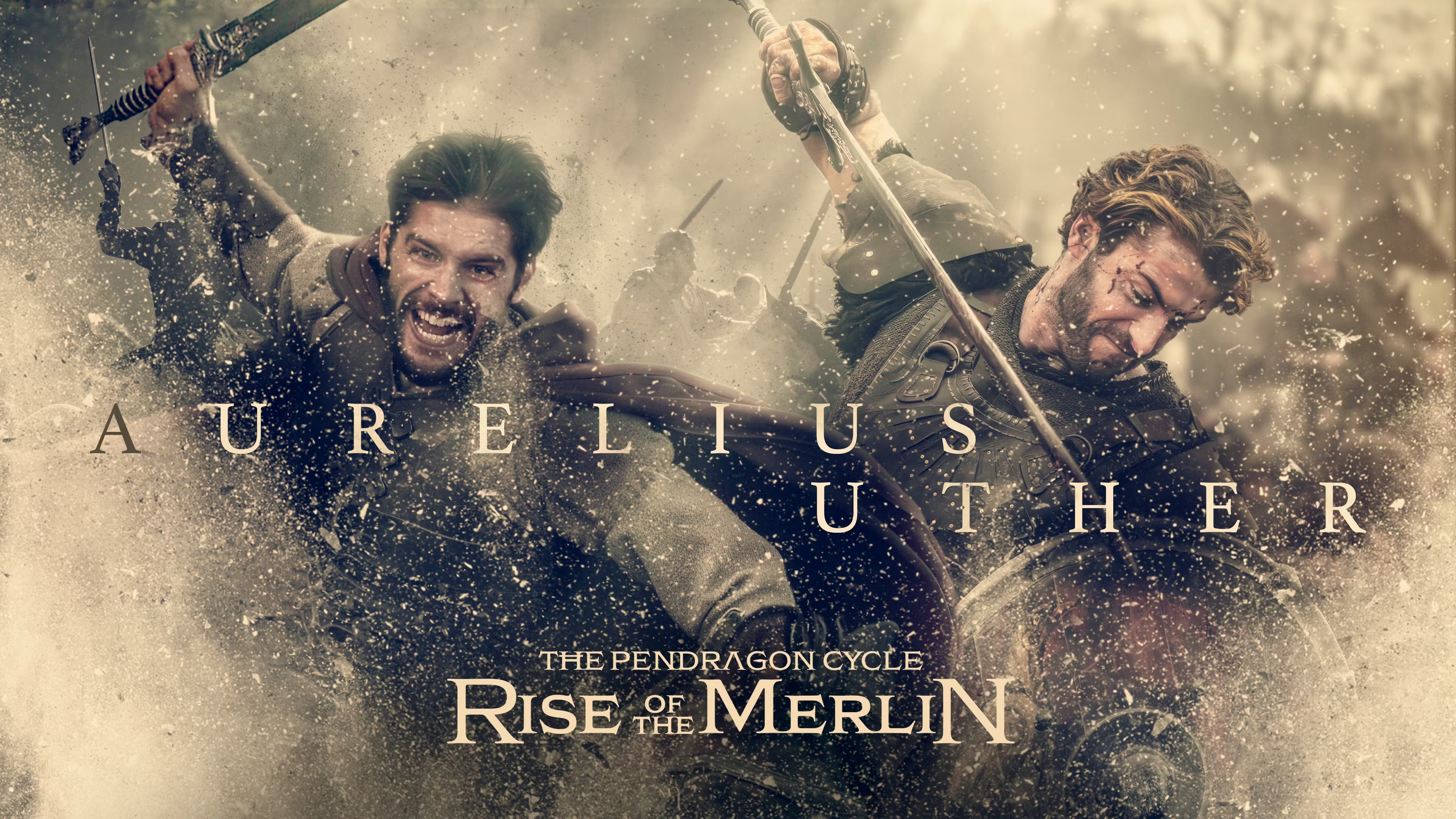
The pacing of episodes one and two is jarring, and Taliesin, the first druid convert, is slightly underwhelming in his performance but the man (and actor) he helps bring into the world, he is not worthy to untie the sandals of. Tom Sharp when he enters as Merlin in episode three, his Atlantean Mother Charis and sorceress aunt Morgain, as well as the brother-high kings of Britain, Aurelius and Uther are all superb and never make you feel as if the dramatic dialogue is speaking from anywhere other than the core of who they are.
In Morgain’s sensuous ploys, the show depicts the blood magic which preceded Christianity abominably well, but without completely damning the druids, bards and seers who integrated the bush Christianity which made its way into Britain and Ireland at the ends of the earth. Lawhead’s take – and I broadly agree with him – is that the religion which made it to these magical lands would have found a flavour so strange and folkloric that Rome would have had a very nervous time managing just such an island, teeming with nature mystics who also loved Christ, the promised Great Light which would drive the darkness out of human hearts and conduct.
And the best thing?
Unlike the painful propaganda of so-called “Christian art” my generation had to endure, you do not have to be a Christian to enjoy this show. The way the characters reference it is organic. They wrestle with their sins and this New God in totally believable ways. But above all it reveals both the indignance and awe pre-Christian pagans would have felt at humanity gathering around a single Sacred Source and the honour of dying to self in thrall to a supernatural High King beyond their ken, beyond any of their own agendas…
More than any other character, Merlin embodies this self-sacrifice and desperate clinging to virtue, but his magical hand is also forced when people threaten those he loves. Turning the miraculous all the way up to 10 amidst devastating synthesizer soundtracks he effortlessly slays armies of hundreds, levitates gigantic plinths before demonic overlords and freezes time itself. There is a tension between the surrender to a higher plan his Iesu demands and going full god mode with all his raw magical power but the character walks that line so delicately that when it culminates in the final battle between Saxon and Briton, it is patently obvious that surrender to The Great Light will become the only path forward for humanity in a world steeped in the will to power and addicting vice.
My suggestion?
If you love high fantasy but tire of the exhausting moral ambiguity of Westeros, or who couldn’t stand the excuse for television that Amazon butchered in The Rings of Power, sign up to the Daily Wire for as long as it takes to finish the seven episodes of The Pendragon Cycle. Look, there’s even a 30% discounted 3 month Pendragon Pass you could dip in and out for.
Just watch it
You can call me a bigot after x
 jared lanigan